
Bridge Loans in Ohio
Understanding A Bridge Loan In Ohio
A bridge loan in Ohio can help when a commercial real estate investor needs short-term capital for a property that is not yet ready for permanent financing. The property may need rehab, stabilization, lease-up, repositioning, or a cleaner operating history before a long-term lender can review it the way the investor plans to operate it.
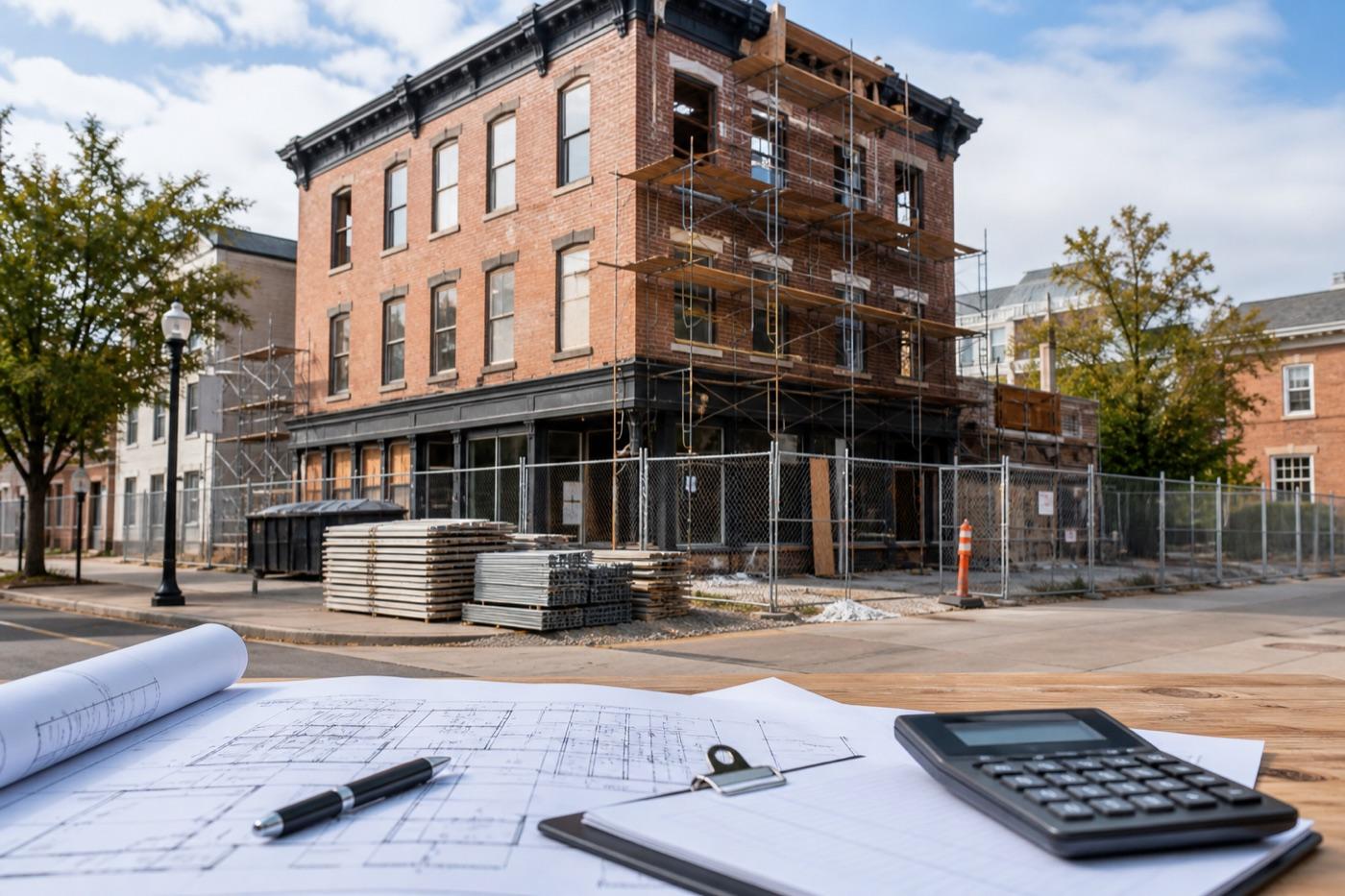
AMZA Capital works with real estate investors seeking commercial bridge financing for, stabilization, purchase and rehab or refinance and rehab scenarios. Loan sizes are $500,000 and up, 75% to 85% LTC, with interest-only rates from 9.49% to 14% as of July 27, 2026, and terms of 12 to 36 months. Eligible property types include multifamily, retail, self storage, office, warehouse, light industrial and other property types.
When A Bridge Loan Can Make Sense In Ohio
Ohio has plenty of properties where conventional permanent debt may not be the right first step. A Columbus multifamily building may have below-market rents and deferred maintenance. A Cleveland warehouse may need tenant improvements before a lease is durable enough for permanent financing. A Cincinnati retail strip may have vacancy that can be addressed through capital improvements and better leasing. A Dayton or Toledo self storage facility may need operational upgrades before the income reflects the sponsor’s plan.
In those situations, the question is not only, “What does the property earn today?” The better question is, “What will the property look like after the work is done, and how does the investor expect to repay or exit the bridge loan?”
That exit discipline matters. A bridge loan is short-term financing. It should be tied to a business plan with a defined path, such as refinancing after rehab and stabilization, selling after repositioning, or another capital event that fits the investor’s overall strategy. The clearer the plan, the easier it is for all parties to understand the use of proceeds, timing, and intended repayment path.
What Ohio Investors Should Underwrite Before Requesting Terms

Before pursuing a bridge loan Ohio investors should build a property-level underwriting package that separates known facts from assumptions. The most useful files answer a few basic questions clearly.
First, what is the property today? That means current rent roll, trailing income and expenses, occupancy, tenant mix, lease expirations, unit condition, property condition, and any known environmental, zoning, title, or access issues.
Second, what capital is needed? A rehab budget should be itemized by major scope category, not summarized as one round number. For multifamily, that might include unit interiors, roofs, mechanical systems, common areas, parking, security, and exterior repairs. For retail, office, warehouse, or light industrial, it may include tenant improvements, facade work, HVAC, loading areas, lighting, signage, or code-related work. For self storage, it may include doors, gates, paving, security, drainage, office upgrades, or expansion-related work.
Third, what changes after the rehab? The pro forma should show the expected operating profile after the work is complete. That includes market rent assumptions, lease-up assumptions, expense assumptions, vacancy expectations, and a stabilized net operating income calculation. Investors should be ready to explain why those assumptions are reasonable for the submarket and property type.
Fourth, what is the exit? A refinance exit generally depends on stabilized income, debt service capacity, appraisal support, and market lending conditions at the time of refinance. A sale exit depends on realistic value, buyer demand, comparable sales, and timing. The exit should not rest on vague optimism. It should be supported by comparable evidence and a practical sequence of work.
How Ltc Changes The Way The Capital Stack Is Built
AMZA Capital’s commercial bridge program finances LTC up to 75% to 85%. LTC, or loan-to-cost, is different from loan-to-value. It focuses on the project’s cost basis, which may include acquisition or refinance basis plus eligible rehab costs, depending on the transaction structure and underwriting.
For an investor, LTC is useful because it requires a full view of the capital stack. A purchase price by itself is not enough. The investor should also identify closing costs, required reserves, immediate repairs, staged rehab costs, leasing costs, carrying costs, and any other project costs that affect total capitalization.
A clean capital stack helps avoid a common problem: closing on the asset but not having enough capital to execute the plan. Bridge financing can be part of the solution, but the borrower still needs to understand total project capitalization and how each dollar supports the business plan.
The Interest-Only Structure Should Fit The Project Plan
Ohio Property Types – Underwriting is Not One Size Fits All
Bridge loans are not one-size-fits-all across commercial property types. The same loan purpose, purchase and rehab or refinance and rehab, can look very different depending on the asset and location.
For multifamily, the core questions often include unit condition, rent roll accuracy, tenant payment history, utility structure, renovation scope, rent comparables, and the practical pace of turning units. A 20-unit property with staggered renovations has a different cash flow pattern than a vacant building requiring a full rehab before occupancy.
For retail, investors should focus on tenant strength, lease terms, co-tenancy, parking, signage, visibility, access, and the cost of making spaces leasable. A vacant suite may need capital, but the more important question is whether the finished space matches actual tenant demand in that corridor.
For office, the underwriting should be especially specific about tenant demand, floorplate utility, building systems, parking, lease rollover, and improvement allowances. A bridge plan that assumes office lease-up should be supported by local market evidence.
For warehouse and some light industrial, investors should look closely at clear heights, loading, power, yard space, truck access, roof condition, slab condition, tenant use, and functional obsolescence. In many Ohio submarkets, the difference between a generic industrial building and a highly usable building can come down to these physical details.
For self storage, the key questions often include occupancy, achieved rents, competitor pricing, unit mix, security, climate control, access, drainage, and digital management systems. A facility can look simple from the outside while still requiring careful operational underwriting.
Local Due Diligence Matters Before A Bridge Loan Closes
Ohio investors should treat local due diligence as part of the financing process, not as a side item. County records, municipal requirements, zoning, building permits, environmental history, taxes, and code compliance can all affect the plan.
For example, a rehab budget may look manageable until the investor confirms required permits, inspections, or code upgrades. A planned use may seem straightforward until zoning or parking requirements are reviewed. A property tax estimate may be too low if it does not account for reassessment risk after purchase or improvement.
Consumer-facing rules are not the same thing as commercial bridge loan terms, but they show why Ohio-specific legal and regulatory context should not be ignored. Investors can review public state materials such as Rule 109:4-3-30 – Ohio Administrative Code as part of understanding the broader state environment. For property-specific legal, tax, zoning, or licensing questions, investors should use qualified local professionals.
Public housing finance documents can also help investors understand how detailed project-level summaries are presented in Ohio. For example, this Proposal Summary illustrates the kind of project detail that can appear in formal real estate documentation, though it should not be used as a statement of AMZA Capital program terms.
A Stronger Bridge Loan Package Is Usually More Specific
A bridge loan request is easier to review when the package is organized around the actual project. Investors should avoid submitting a scattered set of documents without a clear narrative. The goal is to make the transaction understandable.
A practical package often includes the purchase contract or refinance summary, current rent roll, trailing financials, rehab budget, scope of work, contractor information if available, photos, appraisal or valuation support if available, property insurance information, entity documents, and a written business plan. For a refinance and rehab, include the current loan payoff information and explain how the new capital changes the property’s trajectory.
The business plan should be concise but concrete. Identify the property, current condition, planned improvements, total project cost, expected operating changes, and exit strategy. If the plan depends on a refinance, show how stabilized income is expected to support that outcome. If the plan depends on a sale, show the expected buyer profile and comparable transactions.
The best underwriting files do not hide weak points. If there is vacancy, explain the leasing plan. If there is deferred maintenance, show the budget. If the property has a short operating history, provide the evidence that supports the pro forma. If the exit depends on stabilization, define what stabilization means in measurable terms.
How To Think About Risk Before Taking Short-Term Debt
Bridge financing can be useful, but short-term debt requires discipline. The investor should underwrite downside cases before committing to the project.
Start with construction risk. What happens if costs are higher than expected? What if materials or labor take longer? What if repairs uncover additional issues? A contingency line is not just a budgeting formality. It reflects the reality that rehab projects rarely move exactly as planned.
Next, review income risk. If rents take longer to increase, if vacancy persists, or if tenants require concessions, the project may need more carrying capacity. Investors should model slower lease-up and lower income to understand the stress points.
Then review exit risk. Refinance conditions can change. Sale pricing can change. Appraisals can come in differently than expected. A responsible bridge loan plan should include a primary exit and a backup approach that has been considered before closing.
Finally, consider management capacity. A bridge loan can finance a plan, but the investor or operator still has to execute that plan. Construction coordination, tenant communication, leasing, budgeting, and reporting all require attention.
Why Investors Work With AMZA Capital
AMZA Capital provides commercial bridge financing for investors working on purchase and rehab or refinance and rehab transactions. The program facts include loan sizes of $500,000 and up, 75% to 85% LTC, interest-only rates from 9.49% to 14% as of July 27, 2026, and 12 to 36 month terms. Property types include multifamily, retail, self storage, office, warehouse, and some light industrial.
For an Ohio investor, the useful starting point is a clear transaction summary. Identify the property, the requested use of proceeds, the rehab scope, the budget, the current operating profile, and the exit plan. The more specific the information, the more productive the financing conversation can be.
This content is provided for informational purposes only and does not constitute legal, tax, investment, or financial advice. Financing terms, availability, and suitability depend on the specific transaction and underwriting review. No approval or funding outcome is promised or implied.
For AMZA Capital’s commercial bridge program, rates range from 9.49% to 14% as of July 27, 2026, and are subject to change. Rates vary based on FICO, borrower experience, property cash flow, and location.
START WITH AMZA CAPITAL’S FREE QUOTE PAGE.
This article is for informational purposes only and does not constitute financial or investment advice. AMZA Capital is a licensed mortgage lender (CA DFPI 60DBO 86104 | NMLS 2262631). Consult a licensed professional before making financial decisions.