
Hard Money Loans in Ohio
Understanding A Hard Money Loan In Ohio
Ohio’s real estate market moves fast. From the industrial corridors of Cleveland and Columbus’s rapidly appreciating neighborhoods to the riverfront redevelopment zones in Cincinnati, investors who hesitate while waiting on conventional bank financing often lose the deal entirely. Hard money lending exists precisely to solve that problem , and understanding how it works in Ohio’s specific regulatory and market environment is the first step to using it effectively.
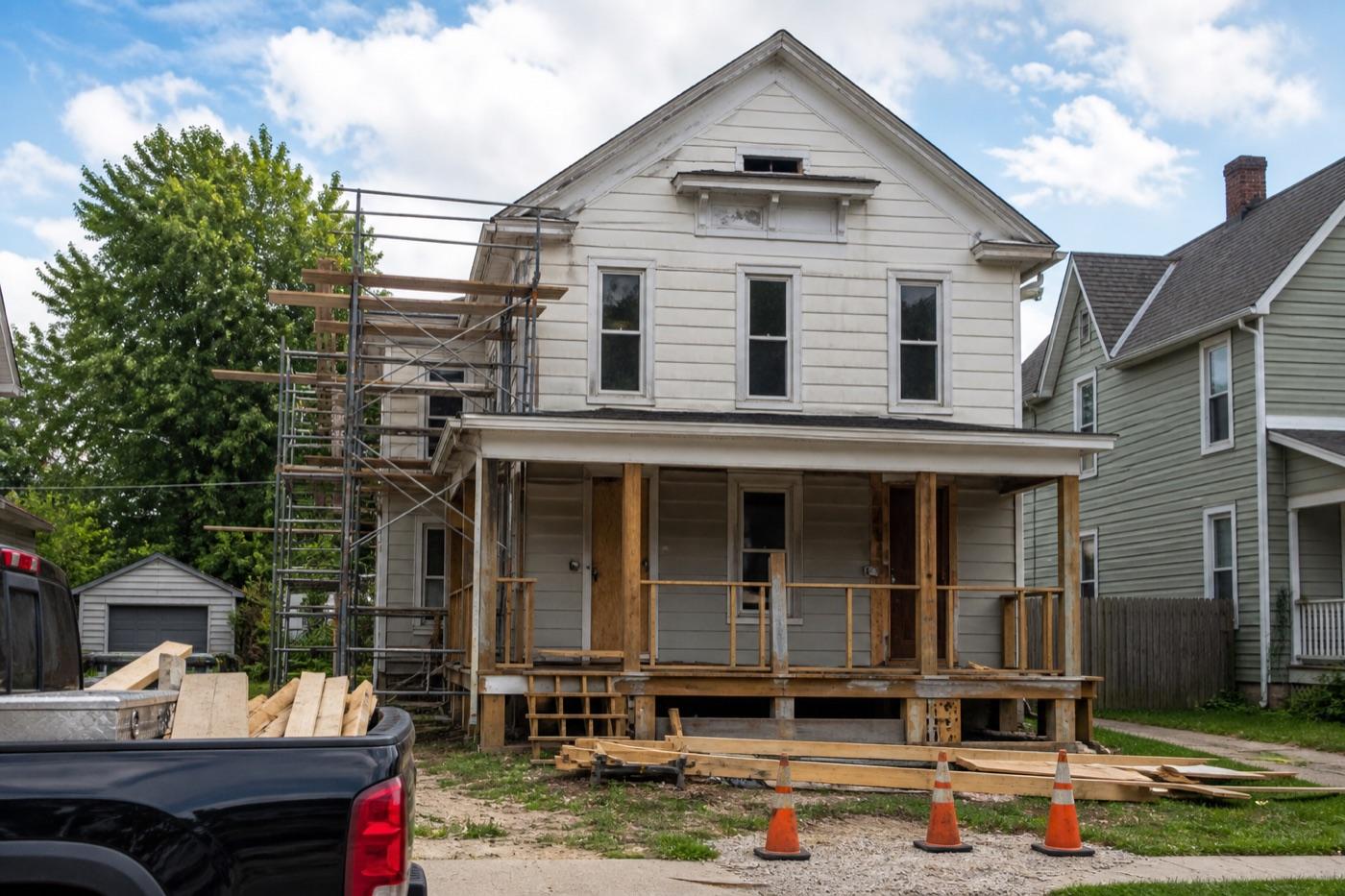
What Hard Money Lending Actually Means For Ohio Investors
A hard money loan is a short-term, asset-backed loan underwritten primarily on the value of the real property serving as collateral , not on the borrower’s tax returns, W-2s, or credit score. Private lenders and specialty bridge lenders look at what the property is worth, or what it will be worth after renovation, rather than running the borrower through the same lengthy income-verification process that traditional banks require.
For Ohio investors, that distinction has concrete implications. Ohio has a robust but competitive market for distressed and value-add properties. Auction houses, sheriff’s sales, and off-market deals frequently require a buyer to show proof of funds or close within days, not months. A conventional lender operating on a 45-to-60-day timeline isn’t built for that pace. Beyond timing, Ohio properties can be peculiar , former church buildings, event venues, mixed-use structures with uncommon layouts, commercial properties sitting in zoning gray areas. Conventional underwriters often decline these on the first pass, while hard money lenders focus on the collateral rather than whether the property fits a conforming template.
Ohio’s Lending Landscape And Why It Matters

Ohio regulates mortgage lending through a combination of state statutes and federal overlay. Section 1321.592 of the Ohio Revised Code governs certain short-term lending activities in the state. Investors should know that business-purpose loans , those made to an LLC or corporation for the explicit purpose of acquiring or improving an investment property , typically sit outside the consumer-protection framework that governs owner-occupied residential mortgages. That distinction affects both how lenders can structure deals and what disclosures apply.
The Ohio Housing Finance Agency also maintains Homeownership Products oriented toward owner-occupant buyers, which makes clear that the state’s conventional programs are built for primary residences. Real estate investors working on fix-and-flip projects, rental acquisitions, or commercial repositioning deals are not the intended audience for those programs , which is exactly why specialty bridge capital fills a critical gap in the ecosystem.
The Core Structure Of A Hard Money Bridge Loan
Hard money bridge loans are designed to be temporary capital , a bridge from your current position to a more permanent solution, whether that’s a refinance into long-term rental financing, a sale to an end buyer, or a cash-out event once a renovation is complete.
A few structural realities every Ohio investor should understand before approaching a hard money lender:
Loan-to-value is the governing metric. Where a conventional lender might lend 75–80% of purchase price on a stabilized residential property, hard money bridge lenders work at much lower leverage levels. At AMZA Capital, fix and flip bridge loans can hit 95-100% LTV for very experienced borrowers with high FICOs, whereas specialty bridge loans are underwritten at 50–60% LTV. A specialty bridge loan covers more out of the ordinary properties like entertainment venues, bars, etc.. The compression exists because the lender is absorbing higher risk , faster timelines, non-stabilized assets, and often less borrower documentation , and the lower LTV is the structural hedge against that risk.
Rates reflect short-term, private capital. Hard money rates are not comparable to 30-year fixed mortgage rates. They price in the speed, flexibility, and risk the lender takes on. Investors should treat the rate as a cost of doing business, factoring it into the project pro forma the same way they budget for carrying costs, insurance, or permit fees.
Terms are short by design. Hard money bridge loans are built for transactions with a clear exit within a defined window. Trying to use a hard money loan as a long-term financing solution is a common mistake that turns manageable carrying costs into a compounding problem.
Why Hard-To-Place Properties Are A Specialty, Not An Obstacle

One of the most underappreciated aspects of working with an experienced hard money lender is the ability to finance property types that conventional institutions won’t touch. AMZA Capital evaluates specialty bridge deals on a case-by-case basis, including asset classes that routinely draw automatic declines from banks: event centers, former churches, properties in transitional use, gentlemen’s clubs, and marijuana facilities, among others.
Ohio’s urban cores , particularly in cities like Youngstown, Toledo, and Dayton , hold significant inventory of repurposed institutional and commercial buildings. A former church in a neighborhood undergoing gentrification, a shuttered event venue with solid bones, or a large mixed-use structure with unconventional zoning can all represent genuine value-add opportunities. The investor’s challenge is that the bank’s underwriting box doesn’t accommodate them. A lender who underwrites from the collateral up, rather than from a conforming property checklist down, can often bridge that gap.
This case-by-case approach extends to borrower credit as well. AMZA Capital’s specialty bridge program will work with borrowers whose credit history makes conventional qualification difficult. The emphasis is on the deal , the property, the equity position, the exit strategy , rather than on a FICO threshold.
Building A Pro Forma That Works With Hard Money Costs
If you’re new to hard money financing, one of the most important discipline shifts is treating the loan’s rate and term as line items in a deal model rather than afterthoughts. Here is how experienced Ohio investors approach it:
Start with the exit, not the entry. Before calculating what you can pay for a property, define your exit: Are you flipping to retail? Refinancing into a DSCR loan? Selling to another investor? Your exit determines your timeline, which determines how long you will carry the hard money debt, which determines total interest expense.
Build in a buffer. Ohio winters can slow construction timelines. Permit offices in some municipalities move slowly. Unexpected structural issues are common in older housing stock, which Ohio has in abundance. A six-month project has a way of becoming an eight-month project, and if your hard money term expires mid-renovation, your options narrow quickly. Negotiate a term that gives you room, and understand your lender’s extension provisions before you close.
Model the full cost stack. Hard money interest, origination points, title, insurance, renovation budget, holding costs, and your projected sale or refi proceeds , all of these belong in a single spreadsheet before you make an offer. Investors who look only at purchase price and ARV without accounting for the financing cost layer frequently find their margins squeezed below viability.
Know your LTV before you make your offer. Because AMZA Capital’s specialty bridge program lends at 50–60% LTV, your purchase price and the lender’s assessed collateral value together determine your maximum loan amount. If you’re buying at 65 cents on the dollar but the lender’s valuation comes in below your contract price, you may need to bring additional equity to close. Understanding this dynamic in advance lets you structure offers and negotiate from a position of clarity rather than scrambling at the closing table.
The specialty bridge program is built for deal types that require flexibility: difficult properties, challenging credit profiles, unconventional use cases, and transactions that need capital structured around the deal’s own logic rather than a standardized product template. Because the program is evaluated on a case-by-case basis, a deal that a bank declines on the first page of the application may still have a path to funding when a lender is willing to look at the full picture.
Ohio investors working in active markets , whether that’s competitive Columbus suburbs, emerging neighborhoods in Cleveland, or value-play markets in smaller cities , benefit from having a hard money bridge relationship established before they need it. Knowing your lender, understanding their underwriting approach, and having a pre-submission conversation about a deal type before you go under contract is the professional standard for active real estate entrepreneurs.
The AMZA Capital free quote page is the starting point for that conversation. It’s not an application and not a commitment , it’s a way to get a frank read on whether your deal fits the program, what the structure might look like, and what questions you need to answer before moving forward.
Related Guides
More guides from AMZA Capital:
- DSCR Loans In Ohio: How Rental Investors Should Think About Cash Flow
- DSCR Refinance In Ohio: What Rental Investors Should Prepare Before Requesting Terms
- Hard Money Loan Rates
- Hard Money Loan Documents
- 100 Percent Fix And Flip Financing: When Experienced Investors May Qualify
- Hard Money Loans in Maryland
- All investor loan guides by state and program
START WITH AMZA CAPITAL’S FREE QUOTE PAGE.
This article is for informational purposes only and does not constitute financial or investment advice. AMZA Capital is a licensed mortgage lender (CA DFPI 60DBO 86104 | NMLS 2262631). Consult a licensed professional before making financial decisions.