
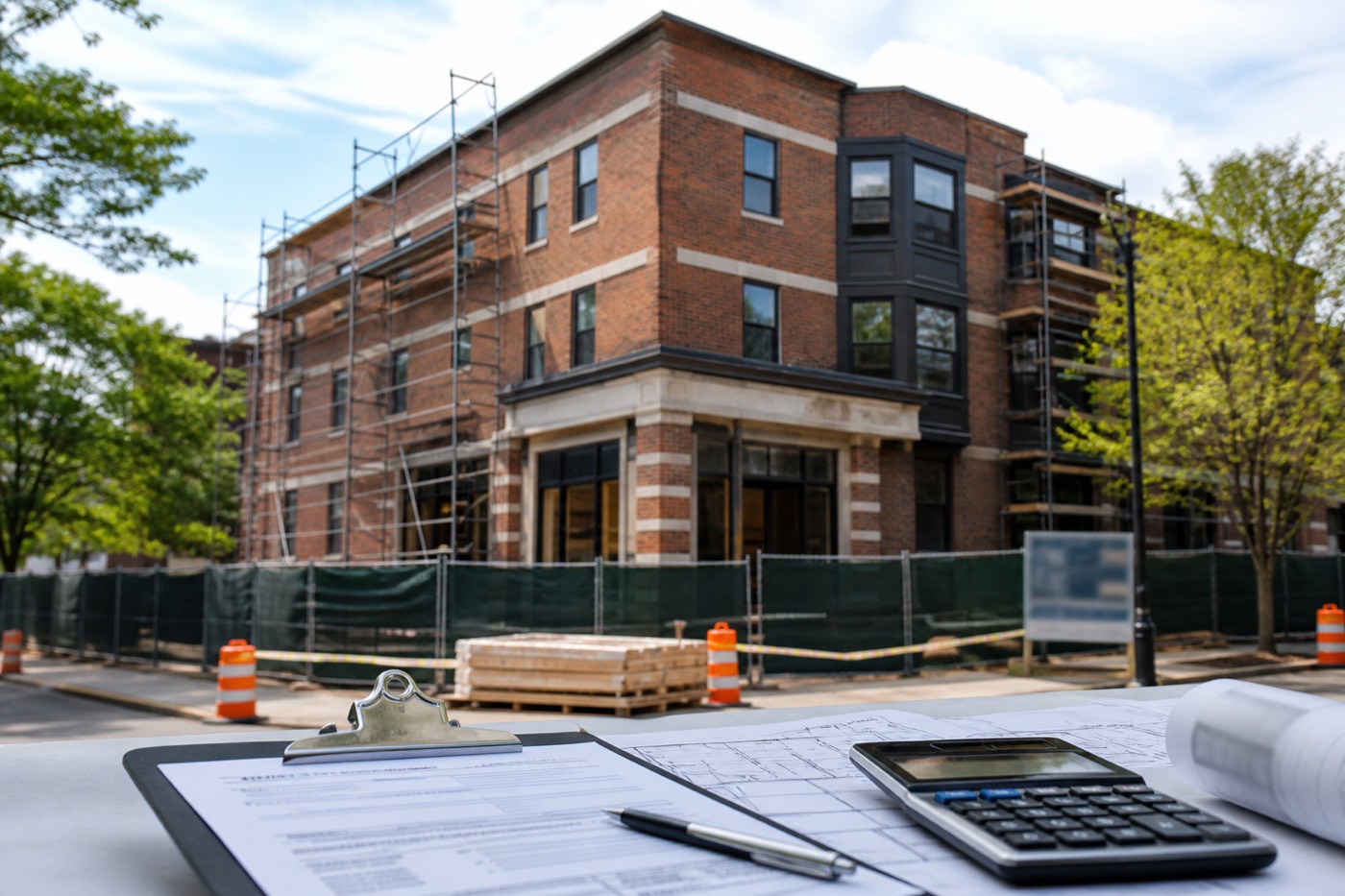
Bridge financing sits at the intersection of speed and complexity. A lender can close a short-term commercial bridge loan in 8-10 days when the file is clean, but the rate on a term sheet is not arbitrary , it reflects a precise read of the deal’s risk profile, the borrower’s track record, and the property’s current and projected financials. Understanding what moves that rate, and what documents a lender needs before quoting anything, saves investors real time and prevents the frustration of chasing terms that can’t be substantiated.
What A Bridge Loan Actually Does In A Real Estate Strategy
A commercial bridge loan is a short-term financing instrument designed to “bridge” a gap , between acquisition and stabilization, between a distressed purchase and a long-term refinance, or between an expiring loan and a permanent replacement. Unlike conventional financing, bridge lenders prioritize asset value and exit viability over income history, which makes this structure attractive for value-add acquisitions, REO purchases, note payoffs, and properties that don’t yet meet agency or bank underwriting standards.
The short duration , typically twelve to thirty-six months , concentrates all of the lender’s risk into a compressed timeline. That concentration is a primary reason bridge loan rates run higher than long-term institutional debt. Lenders price for origination costs, servicing complexity, and the possibility that the exit takes longer than projected. Borrowers who understand this dynamic arrive at negotiations better prepared to justify their assumptions.
The Rate Range And What Shapes It

As of August 18, 2026, AMZA Capital quotes commercial bridge loan rates between 9.49% and 14%, and those rates are subject to change. That 450-basis-point spread exists because no two deals are identical. Four factors do most of the work in determining where a specific deal lands within that range.
FICO and credit history. A borrower with a mid-score above 720 and a clean payment history presents less risk than someone with recent derogatories or a thin file. Lenders are not just checking a number , they are reading the story behind it. A 680 score with a clear, documented explanation lands differently than a 680 score carrying multiple recent collections.
Borrower experience. A seasoned investor who has closed ten value-add projects over the past five years gives a lender a track record that functions as collateral in its own right. First-time or limited-experience borrowers are not excluded, but they typically carry more pricing risk because the lender is underwriting both the deal and the operator at the same time.
Property cash flow and occupancy. A commercial property generating consistent rent , with leases in place and documented income , is a fundamentally different risk than a vacant retail strip being repositioned. Lenders scrutinize rent rolls, lease expiration schedules, and expense ratios carefully. A property already producing income shortens the exit timeline and reduces the chance the borrower needs an extension.
Location and market dynamics. A multifamily asset in a high-demand metropolitan submarket with strong absorption data supports a tighter spread. A rural single-tenant industrial building in a declining market requires more cushion. Lenders think in terms of liquidation scenarios, and market depth directly affects how quickly and confidently they can price.
What Lenders Actually Review Before Quoting Terms
Submitting an inquiry without supporting documentation is one of the most reliable ways to delay your own transaction. A lender reviewing a complete file can provide a substantiated term sheet. A lender reviewing a verbal summary cannot , and if one offers terms anyway, those terms are likely to shift materially once diligence begins.
Here is what AMZA Capital’s underwriting process looks for before terms can be quoted with any meaning.
Property address and description. This sounds obvious, but it matters immediately. The address lets a lender pull comparable sales, assess market conditions, flag environmental concerns, and confirm zoning. Asset type , multifamily, mixed-use, light industrial, retail, office , shapes the entire underwriting approach from the start.
Purchase price and current appraised or assessed value. Lenders need an anchor for loan-to-value calculations. On acquisitions, the purchase contract is the starting point. On refinances, a recent appraisal or a credible broker price opinion provides context. The lender will often order their own valuation, but having supporting documentation upfront signals that the borrower has done their homework.
After-repair value (ARV) support. For value-add and rehab projects, ARV is the engine driving the deal thesis. A borrower asserting that a property will be worth $2.1 million after renovation needs comparable sales to back that up , ideally closed within the past six months, within a reasonable radius, with similar square footage and unit mix. Unsupported ARV projections are one of the fastest ways to lose credibility with an experienced lender.
Rehab scope and budget. A line-item construction budget, prepared or reviewed by a licensed contractor, communicates that the borrower understands what the renovation actually requires. Lenders want to see that the scope is realistic relative to the ARV assumption. A $50,000 renovation budget tied to a $400,000 ARV lift is a conversation that needs explanation.
Borrower FICO and liquidity. Credit scores are pulled, but liquidity documentation matters equally. Lenders want to know that the borrower can fund closing costs, carry the property through renovation or lease-up, and absorb unexpected expenses without defaulting. Bank statements, brokerage statements, and retirement account balances all contribute to that picture.
Rent roll and lease information. For income-producing properties, current rent rolls with tenant names, lease start and end dates, monthly rent, and any concessions in place give the lender a clear view of in-place cash flow. For properties being repositioned, projected rents need market support , typically a market rent study or comparable lease comps from a local broker.
Exit plan. This is the question that underlies every bridge loan: how does the borrower repay? The most common exits are a sale after value creation or a refinance into long-term debt once the property stabilizes. Both require articulation. If the exit is a refinance, the borrower should have a working understanding of what DSCR-based or conventional underwriting will require at maturity , lenders on the bridge side are already thinking about it. AMZA Capital’s resource on DSCR loans and what investors should prepare is useful background for anyone planning a refinance exit.
Loan purpose. Whether the financing is for acquisition, cash-out refinance, note payoff, or construction completion affects the loan structure, the disbursement schedule, and the documentation requirements. Being explicit about purpose upfront avoids clarifying questions that surface mid-process and push timelines back.
Why Incomplete Files Waste Everyone’s Time

The bridge loan market moves quickly, and capable lenders are working multiple deals at once. A file that arrives without ARV support, without a construction budget, or without any documentation of borrower liquidity tells an underwriter that the file is not ready for pricing. The result is either a generic, non-binding indication of interest , which serves no practical purpose , or a string of follow-up requests that stretch the timeline past when the deal needed to close.
Experienced investors know that arriving with a complete file is not just courteous; it is strategically smart. Lenders can engage faster, and the borrower positions themselves as an operator worth doing business with again.
The principle is not unlike the discipline the Federal Reserve applied when evaluating counterparty risk during the Bear Stearns intervention of 2008 , the FRED mortgage rate series before extending any financing facility. At any scale, the lesson holds: lenders price based on what they can verify, not what borrowers assert.
How To Think About Timing And The Lender Relationship
Bridge loans are inherently relationship-oriented products. A lender who closes your first deal on time , with terms that matched the quote , is the lender you bring your next deal to before shopping anywhere else. Borrowers who build a track record with a specific lending partner often see faster processing and more competitive pricing as that relationship matures, because the operator risk portion of the underwriting equation becomes known rather than assumed.
AMZA Capital structures bridge loans for commercial real estate investors across a range of asset types and deal scenarios. If you are preparing for an acquisition, refinance, or value-add project and want to understand what terms a complete file might support, the process starts with a free quote request at amzacapital.com.
For additional public-market context, review SBA loan programs.
For AMZA Capital’s commercial bridge program, rates range from 9.49% to 14% as of July 27, 2026, and are subject to change. Rates vary based on FICO, borrower experience, property cash flow, and location.
START WITH AMZA CAPITAL’S FREE QUOTE PAGE.
This article is for informational purposes only and does not constitute financial or investment advice. AMZA Capital is a licensed mortgage lender (CA DFPI 60DBO 86104 | NMLS 2262631). Consult a licensed professional before making financial decisions.