
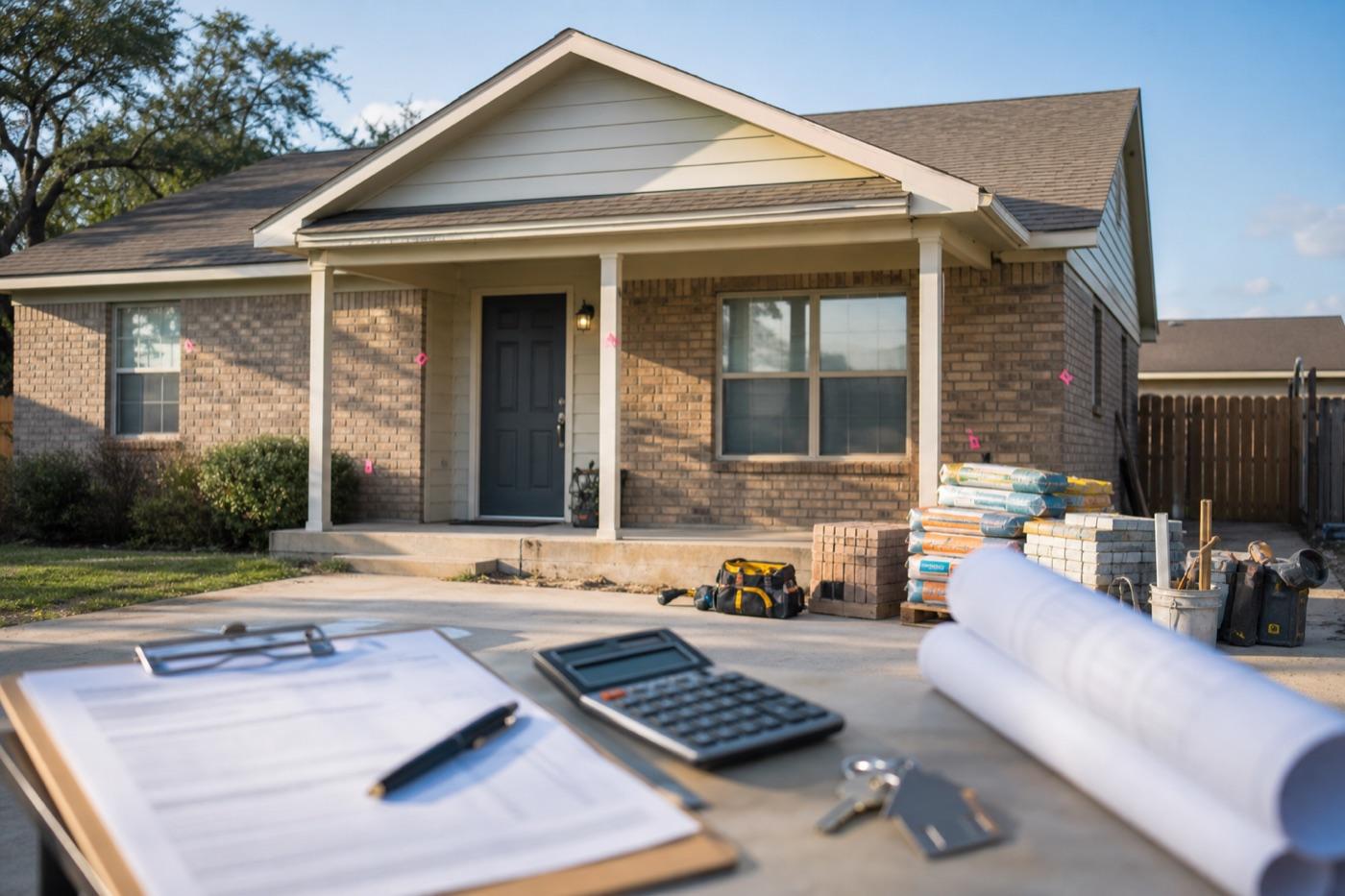
Texas has become one of the most active rental markets in the country, and the reasons are straightforward. Population growth across the Dallas-Fort Worth Metroplex, Austin, Houston, San Antonio, and the smaller cities connecting them continues to outpace housing supply,creating the kind of persistent rental demand that draws investors from both inside and outside the state. According to data published by the National Association of Realtors, Texas consistently ranks among the states with the highest volume of investor-driven purchase transactions, and nothing on the horizon suggests that changes anytime soon.
For investors targeting income-producing rentals rather than primary residences, DSCR loans have become the standard financing structure. A debt-service coverage ratio loan qualifies a borrower based on the property’s rent income relative to its total debt obligations,not the borrower’s personal income documentation. That makes it a practical tool for self-employed investors, portfolio holders who have already hit conventional loan limits, and anyone whose tax returns reflect significant depreciation or business write-offs that compress reportable income.
That said, DSCR loans are not simply “easy” loans with no underwriting. Lenders review a specific set of inputs before they can provide meaningful terms. Walking into a rate conversation without those inputs ready wastes time on both sides and often produces a quote that collapses when the actual file is submitted. This guide is written for investors who want to enter that conversation with a complete, well-organized package that produces real terms rather than placeholders.
Understanding What A DSCR Loan Is Measuring
Before preparing documentation, it helps to understand what the underwriting is actually testing. The core calculation compares gross rental income against the total monthly debt burden on the subject property,principal, interest, taxes, insurance, and HOA fees where applicable. A ratio at or above 1.00 means the property generates enough income to cover its debt service. Below 1.00 means it runs at a cash-flow deficit on paper.
Different lenders set different minimum thresholds. Some will accept ratios slightly below 1.00 for strong-credit borrowers with significant reserves. Others require 1.20 or higher to access the most competitive pricing. Knowing your property’s likely ratio before requesting terms helps you anticipate how lenders will tier your loan,and whether you should be negotiating purchase price, adjusting your financing structure, or reconsidering the asset altogether.
The income figure used in that calculation is typically based on a market rent appraisal or an existing lease, depending on whether the property is occupied. For vacant properties or those between tenants, most lenders rely on a licensed appraiser’s rent schedule rather than the investor’s own projection. For properties with active leases, the in-place rent is the starting point,but the appraiser may still be asked to confirm that the lease reflects market conditions.
Why Texas-Specific Market Conditions Matter To Lenders

Texas real estate is not monolithic. A single-family rental in a stable Houston suburb behaves very differently from a short-term rental in a Hill Country tourism corridor or a newly constructed duplex in a rapidly appreciating North Dallas neighborhood. Lenders underwriting DSCR loans in Texas pay attention to submarket-level dynamics: vacancy trends, rent growth trajectory, property tax rates, and whether the income projection is credible for that specific zip code.
Texas property taxes deserve particular attention. The state has no income tax, and local governments rely heavily on property tax revenue. Effective rates can range from roughly 1.5% to over 3% of assessed value depending on the county and school district,meaningfully higher than many other states where rental investors are active. Those taxes flow directly into the DSCR denominator, and a property that looks cash-flow positive under a low-tax assumption can shift negative once actual tax liability is applied. Investors who model their deal using a rough rule of thumb rather than the correct county rate are often caught off guard when the lender’s underwriting produces a lower DSCR than expected.
Running an accurate pro forma before the conversation begins,using real tax bills or county assessor estimates,puts you in a much stronger position to discuss loan structure with confidence.
What To Have Ready Before Requesting Terms
AMZA Capital’s approach to DSCR loans in Texas starts with understanding the deal before quoting terms. That is not a bureaucratic formality; it is how accurate pricing gets done. Below is what matters most.
Property Address And Purchase Price Or Current Value. The subject property address anchors the appraisal order, the market rent analysis, and the lender’s review of local conditions. For purchases, the executed or pending contract,with purchase price and closing timeline,matters. For refinances, a current estimated value and the payoff balance on any existing liens are needed upfront.
Income Documentation. For occupied properties, a copy of the current lease with the term, monthly rent, and tenant payment history establishes the income baseline. For vacant properties, an investor’s internal projection is a reasonable starting point, but the appraisal-based rent schedule will govern underwriting. Having a realistic sense of market rent,grounded in local comps rather than aspirational estimates,helps set appropriate expectations before the appraisal is ordered.
Borrowing Entity And Credit Profile. DSCR loans are commonly structured in the name of an LLC or other entity, which is standard practice for portfolio investors managing liability. Lenders still require a personal guaranty in most cases, and the guarantor’s credit score is part of the underwriting profile. FICO context matters,not to disqualify most investors, but because credit score influences pricing tiers. Knowing where you stand before requesting terms allows for an honest conversation about how credit affects your specific quote.
Liquidity And Reserves. After closing costs and down payment, lenders want to see that the borrower retains meaningful liquid reserves. The specific threshold varies by lender and loan structure, but post-close reserves covering several months of total debt service on the subject property are a common benchmark. Investors who can demonstrate a strong reserve position typically access more favorable terms. Documenting liquidity,bank statements, brokerage accounts, retirement accounts where applicable,should be part of your pre-submission preparation, not an afterthought.
Loan Purpose And Exit Plan. Is this a long-term hold with a buy-and-rent strategy? A stabilization play where you are refinancing out of a bridge loan after completing improvements? A short-term rental? Each scenario carries different underwriting considerations. Clarity on loan purpose and exit plan helps structure the financing correctly from the start rather than reworking terms mid-process.
For investors who want a closer look at what the preparation process involves across loan types, AMZA Capital has published a companion resource covering what real estate investors should prepare for DSCR loans that addresses documentation in additional detail.
Common Preparation Mistakes That Slow Down The Process

Experienced investors sometimes skip steps because they have closed DSCR loans before,and then run into delays because underwriting standards or documentation requirements have shifted. These are the most common preparation gaps that slow down closings in Texas.
Using estimated property taxes rather than actual figures. As noted above, Texas tax rates are high enough that the gap between an estimate and reality can move DSCR meaningfully. Pull the county assessor’s current assessment and apply the applicable millage rate before modeling the deal.
Presenting informal income records for occupied properties. A handwritten ledger or verbal description of cash rent payments does not satisfy lease documentation requirements. A formal written lease,ideally with a deposit record and payment history,is the baseline.
Failing to account for HOA fees. Texas has a significant number of planned communities, townhome developments, and condo projects with mandatory HOA assessments. Those fees are included in the DSCR denominator and need to be disclosed upfront, not discovered during underwriting.
Presenting the deal through an LLC without having entity documentation ready. Certificate of formation, operating agreement, and EIN documentation should be assembled before the first lender conversation, not after a term sheet is issued.
Requesting terms on a property that is mid-renovation. Most DSCR lenders require the property to be in rent-ready or stabilized condition. A property that is partially improved or vacant due to ongoing work may need a different loan product,such as a bridge loan or fix-and-flip structure,before transitioning to DSCR financing. Investors who understand which product fits their timeline avoid applying for the wrong loan at the wrong stage.
How AMZA Capital Approaches DSCR Lending In Texas
AMZA Capital (CA DFPI 60DBO 86104 | NMLS 2262631) works with rental investors across Texas markets. The intake conversation focuses on specifics: the property, the income, the borrower’s credit and liquidity profile, the deal structure, and the investment objective. Investors who come prepared with those details get real feedback on fundability quickly rather than spending weeks exchanging document requests.
The Texas market rewards investors who move decisively. Having your documentation organized and your deal assumptions stress-tested before you request terms is one of the most practical competitive advantages available,and it costs nothing to develop. Start with your numbers, know your market, and bring a complete file to the first conversation.
Related Guides
More guides from AMZA Capital:
- Hard Money Lenders In Texas: What Real Estate Investors Should Know Before Requesting Terms
- Private Money Lenders In Texas: How Investors Should Prepare A Fundable Deal
- DSCR Loan Rates
- DSCR Loan Lenders
- DSCR Loan Down Payment Requirements
- DSCR Loans in Florida
- All investor loan guides by state and program
START WITH AMZA CAPITAL’S FREE QUOTE PAGE.
*This article is provided for informational purposes only and does not constitute legal, financial, tax, or investment advice. Loan terms, availability, and qualifying criteria vary based on individual file characteristics and are subject to change without notice. AMZA Capital is licensed by the California Department of Financial Protection and Innovation (CA DFPI 60DBO 86104) and operates under NMLS 2262631. Licensing, availability, and product offerings may vary by state. Investors should consult qualified legal, tax, and financial professionals before making real estate investment decisions.*