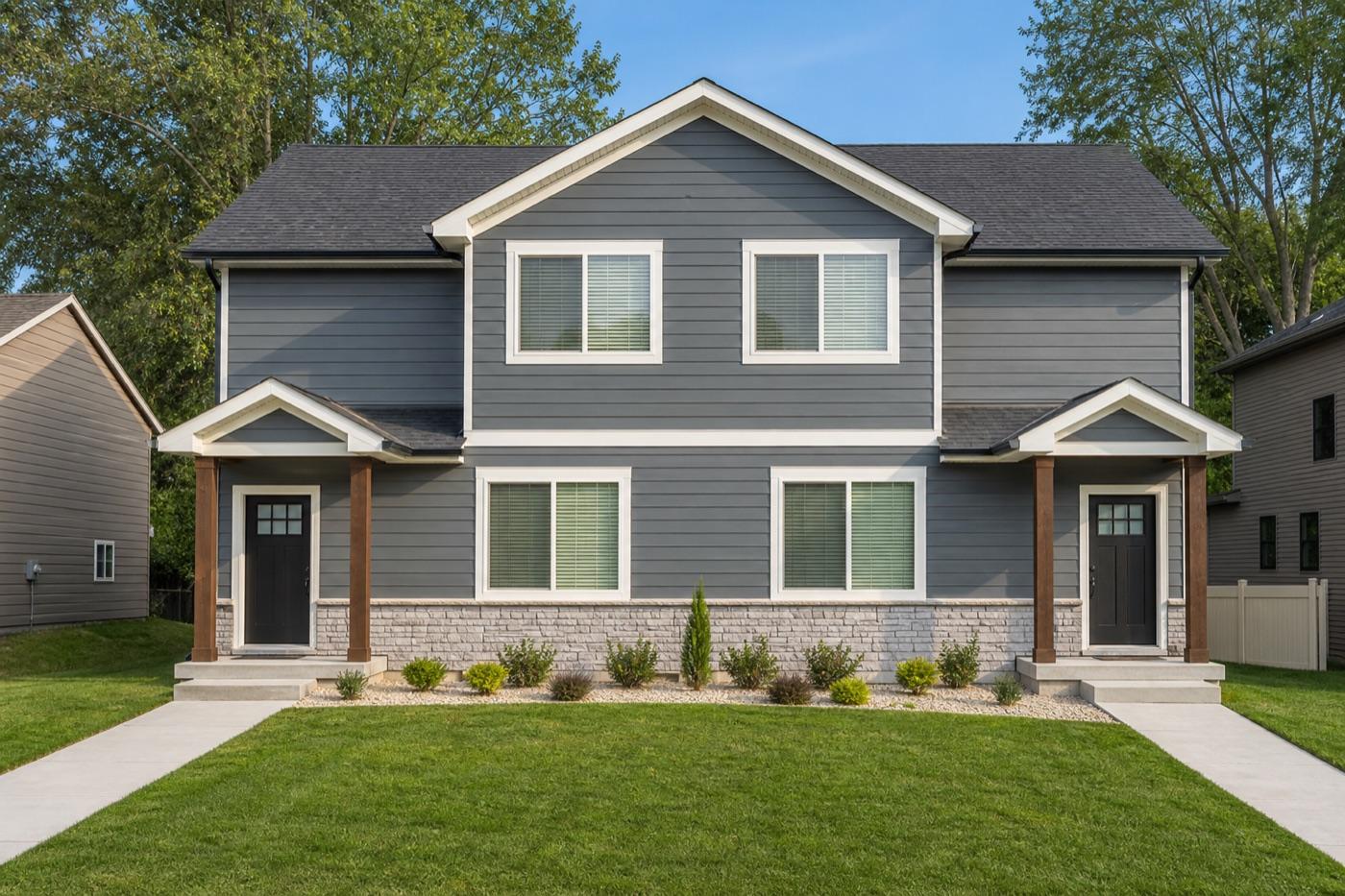
A duplex in Phoenix looks perfect on paper. Market rent is $1,800 per side. Property taxes are $2,400 annually. Insurance runs $1,200. The purchase price is $340,000, and you plan to put 25% down.
You run the numbers and see positive cash flow. But when you contact a DSCR lender, they want more than your projections. They want proof the property can carry its own debt service through rental income alone.
The first thing to understand? Your rental income estimate means nothing until a third party verifies it.
What DSCR Actually Means In Practice
DSCR stands for Debt Service Coverage Ratio. The formula is simple:
Net Operating Income ÷ Total Debt Service = DSCR
Net Operating Income includes rental income minus operating expenses. Operating expenses are property taxes, insurance, maintenance, management, and repairs. The mortgage payment is not an operating expense.
Total Debt Service includes your monthly principal, interest, taxes, and insurance payment (PITI).
Here's where borrowers get surprised. Lenders don't use your rental income projections. They verify rents through independent appraisals or existing lease agreements. If the property is vacant, the appraiser determines market rent based on comparable rentals in the area.
Take that Phoenix duplex. You think it rents for $3,600 monthly ($1,800 per side). The appraiser finds similar units renting for $1,650 per side. Your rental income just dropped to $3,300 monthly.
With a $255,000 loan at 7.5% for 30 years, your PITI payment is roughly $2,300 monthly including taxes and insurance. Your NOI is $3,300 minus $300 monthly for taxes, insurance, and estimated maintenance ($3,000 annually). That gives you $3,000 NOI.
$3,000 ÷ $2,300 = 1.30 DSCR
The math works. But only because the appraiser's rent estimate was close to yours.
Most new investors underestimate how much that appraisal can change their deal. I've seen projections off by 20% or more when reality hits. That's why experienced investors always research comparable rents before they make an offer, not after they're under contract.
The lesson? Your spreadsheet calculations matter, but the appraiser's opinion matters more. Plan for that gap.
The DSCR Tiers That Matter
DSCR lenders group deals into three categories:
DSCR 1.25 and Above: This is the sweet spot. You get the best pricing and maximum loan-to-value ratios. A 1.25 DSCR means the property generates 25% more income than needed to cover the mortgage. Lenders see this cushion as protection against vacancy, maintenance surprises, or soft rental markets.
DSCR 1.00 to 1.24: Still approved but with restrictions. Expect reduced LTV limits and rate adjustments. A 1.00 DSCR means the property breaks even on paper. There's zero room for error.
DSCR Below 1.00: Standard DSCR financing doesn't work. The property doesn't generate enough income to cover its debt service. You need alternative financing or a larger down payment to make the numbers work.
The 1.25 threshold exists for good reason. Rental properties have vacancy periods. Tenants don't always pay on time. Water heaters fail. That 25% cushion keeps the loan performing when real life hits.
But here's what many borrowers don't realize: hitting 1.25 DSCR doesn't guarantee approval. Lenders look at the entire picture. A property with a 1.30 DSCR in a declining neighborhood might get declined while a 1.20 DSCR in a stable area gets approved.
Market conditions affect these tiers too. When rental demand is soft or vacancy rates climb, some lenders raise their minimum DSCR requirements. The 1.25 threshold isn't written in stone.
What Lenders Actually Check
DSCR approval goes beyond the ratio itself. Lenders examine multiple factors:
Property Condition: The property must be rent-ready or already leased at closing. If you're buying a fixer-upper, complete renovations before closing. Cash-out refinances on vacant properties get an exception since you already own the asset.
Independent Appraisal: Every DSCR loan requires a third-party appraisal. You don't choose the appraiser. The lender does. The appraiser determines both property value and market rent.
Property Type Rules: DSCR loans for 1-4 unit properties are investment-only. No owner occupancy allowed. Properties with 5+ units allow owner occupancy.
Borrower Credit: Most lenders require minimum FICO scores of 660 or higher. Higher scores get better rates and terms.
Property Value Minimums: Refinance and cash-out transactions typically require minimum property values of $125,000 or more.
Geographic Flexibility: Suburban, urban, and rural properties all qualify. Location matters less than the property's ability to generate rental income.
Borrower Liquidity: Lenders want to see cash reserves beyond your down payment. This covers maintenance, vacancy, and unexpected expenses.
The appraisal process deserves special attention. Some borrowers think they can influence the appraiser by providing their own rent research. That rarely works. Appraisers use MLS data, recent comparable rentals, and their own market knowledge. They're trained to be conservative.
One investor told me about a fourplex where three units were already rented at $1,200 monthly. The fourth unit was vacant. He assumed it would rent for the same amount. The appraiser valued the vacant unit at $1,050 because it needed carpet and paint. That $150 difference pushed his DSCR from 1.28 to 1.19, which cost him better pricing.
Property condition matters more than most people think. A property that's technically rentable but needs cosmetic work gets penalized in the rent analysis. The appraiser assumes lower rents until the work is done.
According to the Mortgage Bankers Association, investment property lending has grown significantly as investors seek rental income strategies. But approval requires more documentation than owner-occupied financing.
Why DSCR Deals Get Declined Or Repriced

Real underwriting reveals common problems:
Rent Math Doesn't Work: The most frequent issue. Borrowers overestimate rental income or underestimate expenses. Property taxes increase. Insurance costs more than expected. The DSCR falls below program minimums.
Appraisal Shortfall: The property appraises below your purchase price or refinance estimate. This pushes your loan-to-value ratio over program limits. You need a larger down payment or the deal dies.
Insufficient Liquidity: You have enough for the down payment but lack reserves. Lenders want to see additional funds for maintenance and vacancy coverage.
Rent Analysis Problems: Properties with unusual unit configurations or limited comparables make market rent determination difficult. If the appraiser can't establish reliable rent estimates, the loan can't proceed.
Credit Issues: Late payments, high debt-to-income ratios, or recent bankruptcies create approval challenges even when the property cash flows well.
Consider a borrower who found a triplex for $425,000. His calculations showed a 1.35 DSCR based on $2,000 monthly rent per unit. The appraisal came back at $380,000 with $1,750 monthly rent per unit. The LTV jumped from 75% to 84%, and the DSCR dropped to 1.15. The deal required additional down payment and received higher pricing.
The expense miscalculations hurt just as much as rent overestimates. New investors often forget about property management fees if they plan to hire a company later. They underestimate maintenance costs, especially on older properties. A small expense error can push a marginal deal into decline territory.
I've seen deals killed by insurance surprises. Coastal properties face flood insurance requirements. Properties near wildfire zones carry higher premiums. Older properties with outdated electrical or plumbing get surcharged. Get real insurance quotes early, not after you're under contract.
The liquidity requirements catch people off guard too. Most lenders want to see 2-6 months of mortgage payments in reserves after closing. That money can't be tied up in retirement accounts you can't access. It needs to be liquid cash or near-cash equivalents.
Location factors create subtle problems. A property in a transitioning neighborhood might appraise fine but struggle with rent analysis. If recent rentals show declining rates or increasing vacancy times, the appraiser adjusts projected rents downward.
How To Prepare Before Requesting Terms
Smart preparation prevents surprises:
Research Actual Rents: Pull recent rent data from comparable properties. Use Rentometer, Zillow, or local MLS rental data. Don't guess what your property will rent for.
Calculate Conservative NOI: Use actual property tax records and insurance quotes. Add realistic maintenance reserves (5-10% of rental income annually). Subtract these from verified rental income.
Organize Lease Documents: If the property has existing tenants, gather current lease agreements. Month-to-month tenancies need documented rental rates and payment history.
Check Your Credit: Know your FICO score before applying. Address any credit issues early in the process.
Prepare Liquidity Documentation: Organize bank statements and asset documentation. Lenders typically want 2-6 months of reserves depending on the property type.
Run Your Own DSCR: If your conservative calculations don't reach 1.00 DSCR, a lender's won't either. Adjust your purchase price, down payment, or property selection accordingly.
Get Property Tax Records: Actual tax bills show real carrying costs. Tax estimates from online calculators often underestimate actual obligations.
The rent research step requires more work than most people do. Don't just look at asking rents on Craigslist or Facebook Marketplace. Those show what landlords want, not what tenants actually pay. Check with local property management companies. Drive the neighborhood and note "for rent" signs with phone numbers you can call.
Property tax research matters because taxes change. That online estimate might use last year's rate. Check if there are pending tax increases or special assessments. New development can trigger tax reassessments that catch buyers by surprise.
Insurance quotes need to be property-specific. Don't use generic online calculators. Call agents and get actual quotes based on the exact property address. Mention that it's an investment property because coverage requirements differ from owner-occupied homes.
The maintenance reserve calculation varies by property age and condition. A new construction duplex might need 5% of rental income for maintenance. A 1950s fourplex could need 10% or more. Factor in HVAC age, roof condition, and major systems when estimating reserves.
For that Phoenix duplex example, proper preparation means confirming the $1,650 per unit rent through comparable analysis before making an offer. If comps support $1,800, you proceed. If they don't, you adjust your offer price.
Document everything. Create a spreadsheet with comparable rental addresses, rent amounts, dates, and sources. Take photos of properties and units if possible. The more data you have, the better you can defend your rent projections if questions arise.
How AMZA Capital Approaches DSCR Lending
AMZA Capital reviews each DSCR submission individually based on the property's actual cash flow, not a pre-set algorithm. The lender works across 1-4 unit residential properties and 5+ unit commercial properties, with each deal requiring independent appraisal verification.
As a licensed mortgage lender (CA DFPI 60DBO 86104 | NMLS 2262631), AMZA Capital understands that rental property financing depends on property-specific factors. Market rent varies by neighborhood. Operating expenses change by property age and condition. Each deal gets evaluated on its own merits.
The underwriting process starts with property cash flow analysis. If the DSCR math works at conservative rent and expense estimates, the loan moves forward to full underwriting. If the initial numbers don't support the loan amount, AMZA works with borrowers to explore alternatives like increased down payments or different loan structures.
This approach recognizes that real estate investment success depends on accurate cash flow analysis, not wishful thinking about rental rates.
Take Action On Your DSCR Financing
DSCR loans work when the property's rental income reliably covers its debt service with room to spare. Success requires realistic rent analysis, conservative expense calculations, and proper preparation before requesting terms.
Don't wait until you're under contract to verify the financing works. Run the numbers early. Confirm rental rates through market analysis. Calculate realistic operating expenses. If your DSCR calculations support the deal, move forward with confidence.
Related Guides
More guides from AMZA Capital:
- Financing Rental Properties: What Investors Should Prepare Before Asking For Terms
- DSCR Loan Requirements: What Rental Investors Should Confirm Before Requesting Terms
- DSCR Refinance: What Rental Investors Should Confirm Before Replacing Bridge Debt
- DSCR Loans in Florida
- DSCR Loans in California
- All investor loan guides by state and program
START WITH AMZA CAPITAL'S FREE QUOTE PAGE. Submit your property details for a no-obligation financing quote tailored to your specific rental property investment.
—
Written by AMZA Capital
This content is provided for informational purposes only and does not constitute financial, legal, or investment advice. AMZA Capital is a licensed mortgage lender (CA DFPI 60DBO 86104 | NMLS 2262631). Actual loan terms, rates, and availability vary. Consult a licensed financial professional before making investment decisions.