
DSCR Loans in Florida
Understanding Florida DSCR Loans Through Rental Property Cash Flow
Florida’s real-estate investment market draws buyers from across the country, and with good reason. The state combines a large and mobile rental population, a wide variety of property types—from urban condos to suburban single-family homes to small multifamily buildings. For investors looking to finance or refinance rental properties here, a debt-service coverage ratio (DSCR) loan offers a structure designed around the economics of the property itself rather than the personal financial profile of the borrower.

This page explains how DSCR financing works conceptually, why it may suit Florida investors, and what AMZA Capital’s DSCR program looks like in concrete terms.
How a DSCR Loan Is Assessed
A DSCR loan is evaluated primarily on the income-producing capacity of the property being financed. The lender examines the rental income the property generates and compares it to the debt obligation the new loan would create. When rental income is sufficient relative to those debt costs, the property demonstrates the ability to service its own financing—hence the term debt-service coverage ratio.
This stands in contrast to conventional residential mortgage underwriting, where the lender’s central question is whether the borrower’s personal income—wages, self-employment earnings, tax returns—is sufficient to support the debt. In a DSCR structure, the property’s cash flow carries the analytical weight. Personal income documentation is not the axis around which the decision turns.
This distinction matters in practice. A property with a stable rent roll and a loan sized appropriately to that rent can present a compelling case regardless of how the borrower’s personal income looks on paper. The ratio itself is calculated by dividing the property’s rental income by the total debt service on the proposed loan, yielding a number that reflects how comfortably the rent covers the payment.
Why DSCR Financing Fits Florida Investors
Florida’s rental market is dynamic and rewards investors who move deliberately and hold properties across different submarkets. Many experienced investors accumulate several properties over time, and at some point conventional financing becomes difficult to access: personal income documentation grows complicated, existing debt loads on other properties appear on tax returns, and lender debt-to-income calculations can hit ceilings even when every individual property is performing well.
A cash-flow-centered loan structure can sidestep some of these friction points. Because the underwriting focus is on the subject property’s rental income rather than the borrower’s personal income statement, investors with multiple holdings, complex business structures, or non-wage income may find that DSCR financing aligns more naturally with the way their financial lives are actually organized.
Florida also has a broad rental demand base. Population growth, seasonal migration, and strong in-migration from other states sustain occupancy rates across many markets. For investors whose properties are rented and producing documented income, that rental reality can translate directly into a more straightforward financing conversation under a DSCR framework.
It is worth noting that specific questions about how any individual property’s income would be treated—what documentation a lender requires, how different lease structures are evaluated—should be handled directly with the lender for the specific scenario in question.
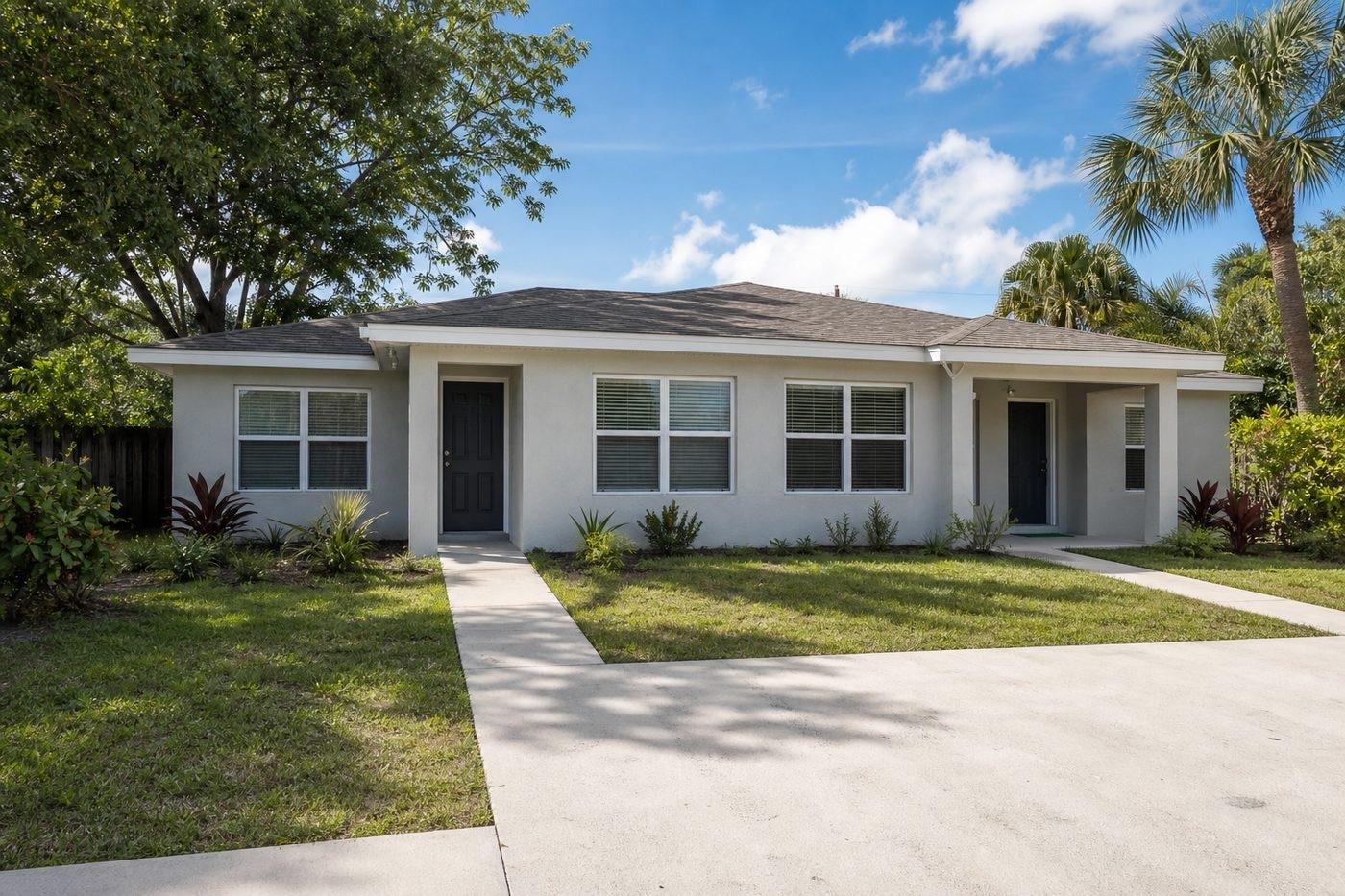
AMZA’s Florida DSCR Program Terms
The following program parameters reflect AMZA Capital’s DSCR buy-and-hold and refinance program. These are the concrete reference points investors should use when evaluating fit.
Eligible property types are 1-8 unit residential properties. This range accommodates a significant portion of the Florida rental market, from single-family homes to small multifamily buildings.
The maximum purchase LTV is 80%. For a purchase transaction, this means the loan can represent up to that share of the property’s purchase price or appraised value, with the investor bringing the remainder.
Cash-out LTV is 75–80%. A cash-out refinance allows a borrower to take an existing property and refinance at a higher loan balance than the current outstanding debt. The LTV percentage shown here represents the new loan’s size relative to the property’s appraised value. Whether any net proceeds result—and how much—depends on the existing mortgage balance, closing costs, and other factors specific to the transaction.
The minimum property value is $120,000. Properties valued below this threshold fall outside the program’s scope.
The minimum FICO score is 680. While DSCR lending centers on property cash flow, borrower credit is still part of the evaluation, and this represents the floor for that component.
Eligibility
DSCR eligibility is built around a straightforward core question: does the property’s documented rental income support the proposed debt service at an acceptable margin? Investors whose properties can demonstrate this relationship through rental documentation are the natural audience for this type of financing.
Beyond the cash-flow analysis, eligible collateral is residential property with 1–8 units and a minimum value of $120,000. Borrowers need a minimum FICO score of 680.
Investors who are newer to real-estate investing and whose properties are not yet generating documented rental income, or whose properties fall outside the eligible types or value range, should discuss their specific situation with AMZA Capital to understand what options might apply.

What to Prepare and How the Process Works
If you are exploring a DSCR loan for a Florida rental property, organizing your information before reaching out to a lender will make your conversations more productive. Here is a practical checklist of what to gather:
Property information: Address, property type, number of units, approximate current value or recent purchase price, and any recent appraisal or valuation documentation you already have.
Rental documentation: Copies of executed leases, current rent rolls if you have multiple units, and any history of rent payments you can readily access. The documentation you already have on hand will shape what questions the lender asks next.
Current debt and expense records: Your existing mortgage statement on the property (if refinancing), current monthly payment amounts, property tax and insurance figures, and any HOA dues. These figures contribute to the debt-service calculation.
Transaction and ownership context: Whether you are purchasing or refinancing, the ownership structure you intend to use, and your timeline expectations. Having clarity on these points helps frame the conversation.
Questions for the lender: Before you speak with a lender, write down the specific questions you have—about rate, structure, documentation, or process. A prepared borrower gets more useful information from any lender conversation.
The process itself—from initial inquiry through underwriting to closing—will vary based on property complexity, documentation completeness, and the lender’s workflow. Approaching any financing process with complete and well-organized records tends to reduce back-and-forth and keeps things moving.
Frequently Asked Questions
What makes DSCR loans different from conventional investment-property mortgages? The central difference is what the lender evaluates most heavily. Conventional loans for investment properties typically require full personal income documentation and apply debt-to-income tests based on the borrower’s wages or business income. DSCR loans are structured around the property’s rental income relative to its proposed debt service, which shifts the analytical emphasis from the borrower’s personal financial picture to the property’s cash-flow performance.
Can I use a DSCR loan to refinance a property I already own? DSCR financing can be used for both purchases and refinances, including cash-out refinances. AMZA’s cash-out LTV is 75–80%. That range limits the new loan relative to property value; any net proceeds depend on the existing outstanding balance and transaction costs—not on the LTV percentage alone.
What role does my personal credit play in a DSCR loan? Even though the primary underwriting focus is on the property’s cash flow, personal credit is still part of the evaluation. AMZA’s DSCR program has a minimum FICO score of 680.
Does the property type matter? Yes. Eligible collateral under AMZA’s DSCR program is residential property with 1–8 units.
What interest rate can I expect? Rates vary based on loan structure, property characteristics, borrower credit, market conditions, and other factors. For current rate information specific to your scenario, please Contact AMZA Capital.
Is DSCR financing right for every Florida rental property? Not necessarily. If a property does not yet have a rental history, falls below the minimum value threshold, or does not generate income sufficient to support the proposed debt service, a DSCR loan may not be the appropriate tool. Other financing structures may apply, and speaking directly with a lender about your specific property and goals is the most reliable way to find out.
Next Steps
If you are evaluating a Florida rental property purchase or refinance and want to understand whether AMZA Capital’s DSCR program aligns with your situation, the most useful thing you can do is start a direct conversation. Bring your property details, your rental documentation, and your questions.
For rate inquiries, scenario questions, or to discuss a specific property, Contact AMZA Capital.
Related Guides
More guides from AMZA Capital:
- Private Money Lenders In Florida: What Real Estate Investors Should Know Before Requesting Terms
- Bridge Loans In Florida
- DSCR Loan Rates
- DSCR Loan Lenders
- DSCR Loan Down Payment Requirements
- DSCR Loans in California
- All investor loan guides by state and program
START WITH AMZA CAPITAL’S FREE QUOTE PAGE.
This article is for informational purposes only and does not constitute financial or investment advice. AMZA Capital is a licensed mortgage lender (CA DFPI 60DBO 86104 | NMLS 2262631). Consult a licensed professional before making financial decisions.