
Bridge Loans in Maryland
Understanding A Bridge Loan In Maryland
Maryland’s commercial real estate market rarely waits for permanent financing. A Baltimore apartment building sits half-vacant after a sloppy prior owner. A strip center in Prince George’s County has three dark bays and a motivated seller. A warehouse near the I-95 corridor needs a roof, new dock doors, and a tenant before any bank will look at it. Each property has potential, but in its current condition it doesn’t fit a conventional lender’s box.
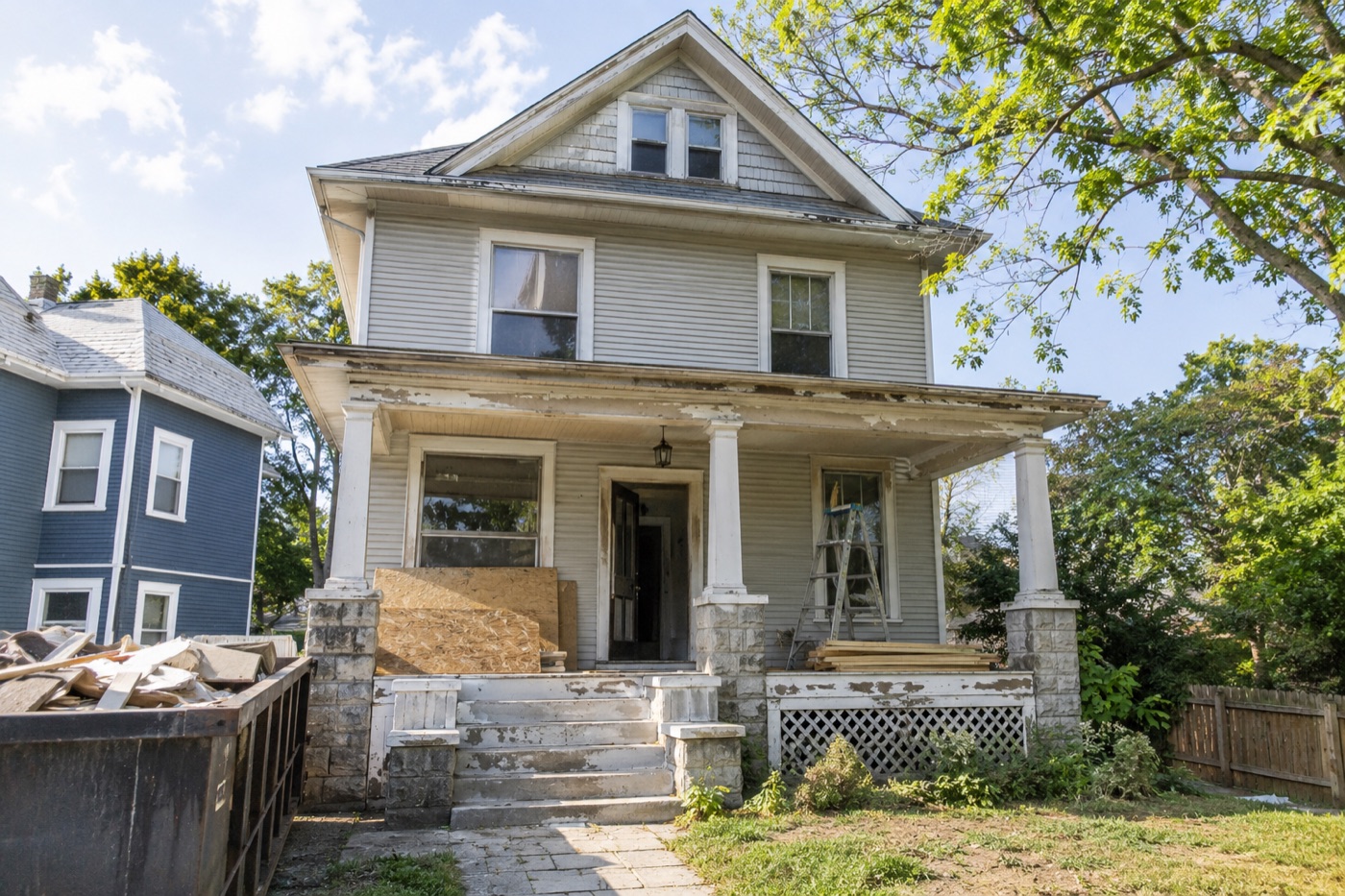
A commercial bridge loan covers that gap. It’s short-term, interest-only financing to buy or refinance a property that needs work, so you can stabilize the asset and then move to long-term debt or sell. Below we walk through how AMZA Capital structures its commercial bridge program, how the numbers play out on a Maryland deal, and what to have ready before you ask for a quote.
What Is A Commercial Bridge Loan, And When Does It Make Sense?
A bridge loan finances a transition. The property you buy or refinance today isn’t the property you plan to hold or sell later, and bridge capital covers the time in between. That could be a renovation, a lease-up, a repositioning, or catching up on deferred maintenance that kept the asset from qualifying for agency or bank financing.
Investors usually reach for bridge debt when:
- The property is underperforming. Low occupancy, below-market rents, or deferred maintenance can keep a building out of permanent financing until those problems are fixed.
- A rehab drives the business plan. You need money for the acquisition and for the improvements that create the value.
- The existing debt is maturing. You own a property that needs work, and the current loan comes due before the property can support a permanent refinance.
- Timing matters to the seller. Some sellers prefer buyers who aren’t waiting on a long permanent-loan process.
Bridge financing costs more than stabilized debt, and it’s meant to be replaced. Your exit plan deserves as much attention as your entry price.
AMZA Capital’s Commercial Bridge Terms At A Glance

These terms are current as of October 7, 2026. AMZA Capital uses the same commercial bridge terms in every state where it offers the program.
| Term | Program detail |
|---|---|
| Loan size | $500,000 and up |
| Loan-to-cost | 50–70% |
| Interest rate | 9.49–14% |
| Payment structure | Interest-only |
| Loan term | 12–36 months |
| Loan purpose | Purchase and rehab, or refinance and rehab |
| Property types | Multifamily, retail, self storage, office, warehouse, some light industrial |
These ranges cover the program as a whole. Where a given loan lands within them depends on the property, the business plan, and the review of the full request. A range isn’t a quote, and nothing in the table commits AMZA Capital to a particular loan.
On leverage: commercial bridge loan-to-cost is 50–70%. That’s lower than what some investors are used to on residential fix-and-flip or residential investment bridge loans. Those are different products, and their leverage figures don’t carry over to commercial properties. Plan your equity around the commercial range.
Which Maryland Property Types Fit The Program?
The program covers multifamily, retail, self storage, office, warehouse, and some light industrial properties. Here’s how those categories tend to look in Maryland.
Multifamily In Baltimore And The Suburbs
Maryland apartments run from Baltimore rowhouse conversions and garden-style complexes in Baltimore County to mid-rise buildings in Montgomery County and Prince George’s County. Typical value-add work includes unit interior upgrades, building system replacements, and bringing vacant units back online. Check local rules before you underwrite rent growth. Baltimore City has its own rental licensing and inspection requirements, and some jurisdictions, including Montgomery County, have adopted rent stabilization rules that can limit how fast you raise rents. If the business plan ignores these constraints, the refinance number it projects may never materialize.
Retail Centers And Mixed-Use Corridors
Neighborhood centers along commercial corridors in Anne Arundel, Howard, and Harford counties often trade at a discount after anchor or inline tenants leave. A bridge loan can fund the purchase plus the tenant improvements, façade work, or parking repairs needed to re-lease the space. Lenders and permanent-loan underwriters will look closely at the credit and lease terms of whoever fills those bays, so build a realistic leasing timeline into your plan.
Warehouse, Light Industrial, And Self Storage
The Baltimore-Washington corridor, the BWI submarket, and logistics demand tied to the Port of Baltimore keep interest in warehouse and flex space steady. Older buildings may need clear-height workarounds, dock upgrades, or roof and HVAC replacement to compete. Self storage conversions and expansions are another common bridge use. Not every industrial use fits, though. The program covers some light industrial, so describe the actual use clearly in your request.
Office Repositioning
Office is the most scrutinized asset class right now. Bridge capital can work for an office building with a credible plan, whether that’s re-tenanting, a renovation, or a partial change of use. Expect the business plan and exit to get a hard look.
How The Numbers Work On A Maryland Bridge Deal
Loan-to-cost compares the loan to the total project cost: the purchase price (or your existing basis on a refinance) plus the rehab budget. The example below is illustrative only. It isn’t a quote or an offer.
Say you’re buying a 24-unit building in Baltimore County for $2,000,000 and plan $500,000 of renovation.
- Total project cost: $2,500,000
- Loan at 50% LTC: $1,250,000
- Loan at 70% LTC: $1,750,000
- Your equity, depending on leverage: roughly $750,000 to $1,250,000, before closing costs and reserves
Then there’s the carry. Loans in this program are interest-only, so your monthly payment is interest on the outstanding balance. At an illustrative 11% rate on a $1,500,000 balance, that’s $165,000 a year, or about $13,750 a month. At the bottom of the range, 9.49%, the same balance runs about $11,860 a month. At the top, 14%, it’s about $17,500 a month. Your actual rate depends on the deal, so stress-test your plan across the whole range instead of counting on one number.
Build Your Budget Around The Exit
The exit decides whether a bridge loan works. Before you submit a request, model:
- Stabilized net operating income. Use rents your comparables support, along with realistic vacancy and expense assumptions, including Maryland property taxes and insurance.
- The refinance or sale. Estimate what a permanent lender would lend against stabilized NOI, or what a buyer would pay. Make sure the proceeds pay off the bridge balance with room to spare.
- The timeline. Terms run 12 to 36 months. Lay out construction, permitting, and lease-up, then add contingency. Permitting in some Maryland jurisdictions takes longer than investors expect.
- Interest carry and reserves. Interest-only payments still need cash every month until the property produces income.
If the refinance only works under best-case assumptions, go back to the purchase price or the scope before you look for financing.
Account For Maryland Transaction Costs
Maryland deals carry a state transfer tax plus county-level recordation and transfer taxes, and the rates vary by jurisdiction. On commercial deals these can add up and change how much cash you need at closing. Confirm current figures for your county with your title company or closing attorney and put them in your sources and uses.
Purchase-And-Rehab Vs. Refinance-And-Rehab
The program supports two structures.
Purchase and rehab. You’re buying the property and funding improvements. Loan-to-cost is measured against the purchase price plus the renovation budget. This fits value-add acquisitions where the asking price reflects the property’s current condition.
Refinance and rehab. You already own the property and need money for improvements, often while replacing existing debt. This fits owners whose current loan is maturing, or who bought with cash and now want to fund a renovation. Be ready to document your basis and the scope of work.
Either way, a detailed rehab budget helps. Line-item budgets, contractor bids, and a realistic schedule show how the money turns into value.
Maryland Legal And Regulatory Points To Discuss With Your Team
This isn’t legal advice, but a few Maryland-specific points come up often enough that they’re worth raising with your attorney and title company.
Security instruments. Maryland real estate loans are commonly secured with a deed of trust rather than a traditional mortgage. To see how a uniform Maryland instrument is laid out, look at the Form 3021 – Maryland Deed of Trust. That form is written for residential lending and commercial loan documents differ, but it’s a useful reference for how Maryland security instruments are organized.
Consumer vs. business-purpose lending. Federal rules such as Regulation Z’s § 1026.35 Requirements for higher-priced mortgage loans. are written for consumer credit secured by a borrower’s principal dwelling. Commercial bridge loans on income-producing properties fall in a different category, but confirm with counsel how any rules apply to your structure and borrowing entity.
Entity and title matters. Most commercial investors borrow through an LLC or other entity. Get your operating agreement, authority documents, and title in order early. Cleanup problems tend to show up late and cause delays.
What To Prepare Before You Request A Quote
A complete request lets AMZA Capital evaluate your deal efficiently. Pull together:
- Property details: address, property type, size, unit or suite count, and current condition
- Purchase contract or current ownership details, including existing debt if refinancing
- Rehab budget and scope: line items, contractor bids if available, and a schedule
- Current operating data: rent roll, trailing operating statements, and leases for commercial tenants
- Business plan: target rents or lease terms, stabilization timeline, and exit strategy
- Sponsor background: your experience with similar properties and projects
- Sources and uses: how the purchase, rehab, closing costs, and reserves will be funded
A clear plan makes for a better conversation. A specific request, such as “$1.6 million to buy and renovate a 24-unit building in Towson, refinancing to permanent debt after 18 months of lease-up,” is easier to evaluate than a general inquiry.
Why Investors Talk To AMZA Capital About Commercial Bridge Financing
AMZA Capital is a private real estate lender focused on investor financing. Its commercial bridge program is built for the deals Maryland investors chase: value-add multifamily, retail repositioning, storage, office, warehouse, and some light industrial properties, with loan sizes starting at $500,000.
The structure is simple: interest-only payments, 12- to 36-month terms, and leverage of 50 to 70% of cost. You can model your deal against the published ranges before submitting anything, and the same terms apply in every state where AMZA Capital offers the program.
For AMZA Capital’s commercial bridge program, rates range from 9.49% to 14% as of October 7, 2026, and are subject to change. Rates vary based on FICO, borrower experience, property cash flow, and location.
Related Guides
More guides from AMZA Capital:
- Hard Money Loans in Maryland
- DSCR Loans in Maryland
- Bridge Loan For Fix And Flip: How Investors Should Structure Acquisition, Rehab, And Exit
- Bridge Loan Rates
- Bridge Loan Requirements
- Bridge Loans In Florida
- All investor loan guides by state and program
START WITH AMZA CAPITAL’S FREE QUOTE PAGE.
This article is for informational purposes only and does not constitute financial or investment advice. AMZA Capital is a licensed mortgage lender (CA DFPI 60DBO 86104 | NMLS 2262631). Consult a licensed professional before making financial decisions.