Owner-users—businesses that occupy and operate out of their own commercial real estate—face a different lending landscape than pure investors. Understanding how commercial property loan rates are set, what lenders look for, and how regulatory compliance shapes your options is essential for any business owner considering a purchase or refinance. This article breaks down the key factors that drive commercial loan rates for real estate, with a focus on owner-occupied properties, and explains how AMZA Capital approaches these transactions.
Owner-Occupied vs. Investor Commercial Loans: Key Differences
Commercial property lending is not one-size-fits-all. The distinction between owner-occupied and investor (non-owner) properties is foundational in underwriting and pricing.
- Owner-Occupied Loans: The borrower’s business occupies at least 51% of the property. The property is integral to business operations—think medical offices, warehouses, or retail storefronts.
- Investor Loans: The property is held primarily for rental income or appreciation. The borrower’s business does not occupy the majority of the space.
Why does this matter? Owner-occupied loans are often underwritten with a focus on the operating business’s cash flow, not just property income. This can open up more flexible terms for strong businesses, but also introduces new risk factors—if the business struggles, so does the loan. Investor loans, by contrast, are typically evaluated on property income, lease terms, and tenant quality.
For a deeper dive into commercial real estate financing structures, see AMZA Capital’s commercial real estate financing overview.
How Lenders Price Owner-Occupied Commercial Loans
Lenders use a blend of market benchmarks, risk assessment, and property-specific factors to set commercial loan rates for real estate. For owner-users, the process typically involves:
- Business Financials: Lenders analyze tax returns, profit and loss statements, and balance sheets. Strong, stable cash flow can support more favorable terms.
- Property Type and Location: Certain property types (medical, industrial, office) and locations (urban, suburban, tertiary markets) carry different risk premiums.
- Loan-to-Value (LTV) Ratio: Lower LTVs (more equity) generally mean lower rates. Most owner-occupied loans cap LTV at 70-80%.
- Debt Service Coverage Ratio (DSCR): For owner-users, DSCR is calculated using business net operating income. Most lenders require a DSCR of 1.20x or higher.
- Credit Profile: Both business and personal credit histories are reviewed. Strong credit can unlock better pricing.
- Amortization and Term: Longer amortizations (20-25 years) can improve cash flow but may carry higher rates than shorter terms. A commercial property loan calculator shows how the amortization and term change the payment and the balloon due at maturity.
Market conditions also play a role. Commercial property lending rates are influenced by indices such as the 5-year and 10-year Treasury yields, as well as lender cost of funds and risk appetite. Rates can move quickly in response to economic shifts, so timing matters.
Rate Ranges and Typical Underwriting
While specific rates vary by deal and market, owner-occupied commercial loan rates generally fall within a range that reflects the risk profile of the business and property. Here’s what to expect in a typical underwriting process:
- Initial Assessment: Lenders review the business’s financials, property details, and ownership structure. Red flags—such as declining revenues or specialized property types—may trigger additional scrutiny.
- Appraisal and Environmental Review: A third-party appraisal establishes property value. Environmental due diligence is standard, especially for industrial or manufacturing sites.
- Underwriting Committee: Deals are reviewed by credit teams who weigh business strength, collateral, and market conditions. Underwriting guidelines are strict—especially for higher leverage or unique property types.
- Rate Determination: The final rate is set based on risk, loan structure, and market benchmarks. Most owner-user loans are priced over a base index (such as the 5-year Treasury) plus a margin reflecting risk.
It’s important to note that rates are not guaranteed and can vary significantly based on the specifics of the transaction. For current market insights and a tailored quote, visit our free quote page.

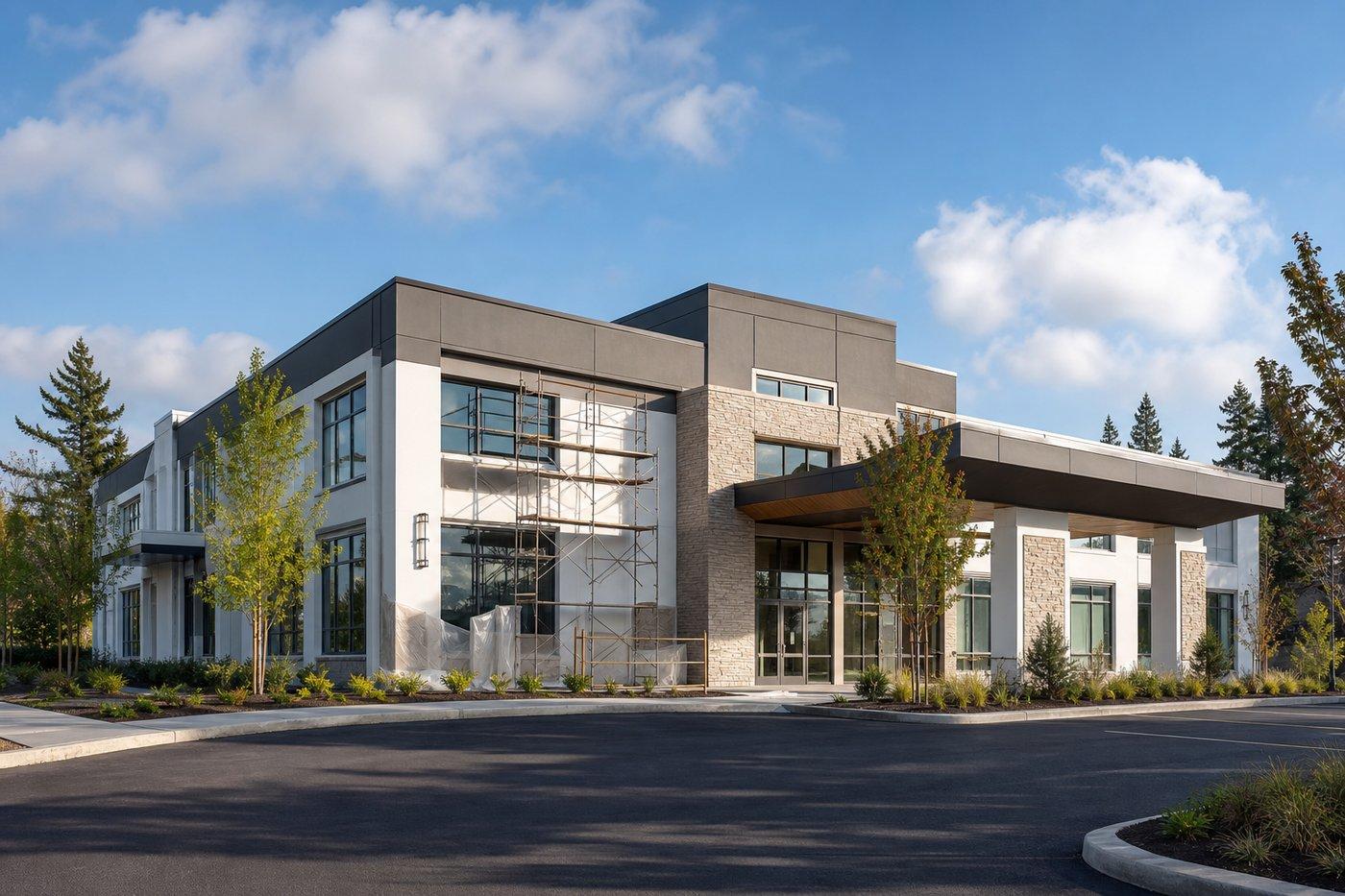
Experienced underwriting teams evaluate both business and property fundamentals for owner-occupied loans.
AMZA Capital’s Lending Criteria & State Regulations
AMZA Capital is a licensed mortgage lender (CA DFPI 60DBO 86104 | NMLS 2262631) specializing in commercial property lending for owner-users and investors. The firm’s approach is rooted in disciplined underwriting, transparent communication, and strict adherence to state and federal regulations.
Lending Criteria Highlights:
- Minimum occupancy: 51% owner-user
- Loan amounts: Typically $1 million and up
- Property types: Office, medical, industrial, retail, and select special-use
- Underwriting: Full review of business financials, property value, and sponsor experience
- State licensing: AMZA Capital lends in most states, but certain products are subject to state-specific licensing and regulatory restrictions. For example, general commercial loans are not available in MN, ND, SD, or VT. For a full list of eligible states and product availability, consult AMZA Capital’s commercial financing page.
AMZA Capital does not offer consumer or primary-residence loans. All financing is strictly for business and investment real estate purposes.
Why Licensing and Compliance Matter
Commercial property lending is a regulated activity. Working with a licensed lender ensures that your transaction is handled according to state and federal law, with proper disclosures and consumer protections where applicable. AMZA Capital operates under CA DFPI 60DBO 86104 and NMLS 2262631, and maintains compliance with all relevant statutes in each state where it lends.
Compliance also means clear communication about product limitations, rate variability, and underwriting standards. Borrowers should be wary of unlicensed operators or those who promise guaranteed approvals or rates. AMZA Capital’s commitment to transparency and regulatory compliance is central to its lending philosophy.

Licensed lenders like AMZA Capital adhere to strict regulatory standards in every state where they operate.
Next Steps: Getting a Quote and Preparing for Underwriting
Securing a commercial property loan as an owner-user starts with preparation. Gather your business financials, property details, and ownership documents. Understand your business’s cash flow and be ready to discuss your plans for the property.
For a tailored assessment of your financing options, start with our free quote page. An experienced team will review your scenario, explain available products, and outline next steps—always within the bounds of state and federal regulations.
For more information on commercial property lending, visit AMZA Capital’s commercial real estate financing resource or consult the Consumer Financial Protection Bureau for general regulatory guidance.
Related Guides
More guides from AMZA Capital:
START WITH AMZA CAPITAL’S FREE QUOTE PAGE.
*This article is provided for informational purposes only and does not constitute financial, legal, or investment advice. Loan availability, terms, and eligibility are subject to lender review and may change without notice. AMZA Capital | CA DFPI License 60DBO 86104 | NMLS 2262631.*
Author: AMZA Capital lending team. AMZA Capital operates under CA DFPI 60DBO 86104 and NMLS 2262631. This article is for informational purposes only and is not a commitment to lend.