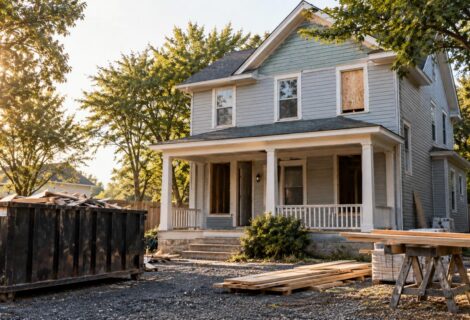

New Jersey’s real estate market rarely rewards hesitation. Inventory is tight across many of the state’s most active corridors,from the Bergen County suburbs to the transit-linked communities along the Northeast Corridor,and well-priced distressed properties can draw multiple offers within days of hitting the market. For investors pursuing fix and flip funding in New Jersey, that compressed timeline makes pre-deal preparation critical. Walking into a lender conversation without the right documents, assumptions, and exit clarity does not simply slow things down; it can cost you the deal entirely.
What follows is a breakdown of exactly what experienced private lenders evaluate before quoting terms on a New Jersey fix and flip loan, and how you can structure your file to reflect a credible, well-underwritten opportunity.
Why New Jersey Deals Require Specific Preparation
New Jersey is not a monolithic market. Cap rates, days-on-market, price-per-square-foot trends, and buyer demographics vary sharply between a Cape May County shore property, a Passaic County two-family, and an Essex County single-family near a transit hub. Lenders who understand this state expect borrowers to demonstrate similar granularity. Generic assumptions,”the ARV is around $400K” or “rehab should be about $40K”,signal to an underwriter that the investor has not done the work.
Research from the National Association of Realtors consistently shows that median sales prices and days-on-market differ significantly at the metropolitan and zip-code level. That kind of micro-market variation matters enormously in fix and flip underwriting, because a lender’s comfort with your after-repair value depends on how accurately that number reflects actual comparable sales in the specific submarket,not just the county or MSA.
The Property Address And Purchase Contract Come First

Every underwriting conversation starts with the subject property. Before requesting terms, you should have the address confirmed and, ideally, a signed purchase contract or letter of intent in hand. A lender cannot size a loan, evaluate an ARV, or assess rehab feasibility without knowing what the collateral is.
The purchase contract also tells a lender several things at once: your negotiated price, the seller’s timeline expectations, any contingencies, and whether the deal structure is straightforward or layered with complexity. If you are buying at auction or through a wholesaler assignment, note that upfront,these structures affect closing timelines and sometimes documentation requirements.
ARV Support Is Not Optional
After-repair value is the foundation of fix and flip loan sizing. Most private lenders in this space lend against a percentage of ARV, which means that if your ARV is unsupported or inflated, your loan proceeds will not cover the project the way you expect.
Before requesting terms, assemble a comparable sales package that supports your ARV. Ideally, this includes three to five closed sales within the past three to six months, within a reasonable geographic radius of the subject property, with similar square footage, bedroom and bathroom count, lot size, condition, and style. In dense New Jersey markets like Hudson County or Union County, “comparable” has to be quite precise,a renovated colonial in Westfield does not comfortably support the ARV of a cape cod that needs a full gut renovation two miles away.
If you have an appraisal, bring it. If you are working with a broker’s price opinion or a real estate agent’s comparable market analysis, have the supporting data ready. The stronger your ARV documentation, the faster a lender can work and the more confident their terms will be.
A Detailed Rehab Scope And Budget

Lenders are financing a project, not just a purchase. The rehab scope is a direct input into the loan structure, because many fix and flip loans include a construction holdback released in draws as work is completed. If you cannot articulate what work is planned, what it will cost, and in what sequence it will occur, a lender cannot structure a draw schedule around your project.
Your scope of work should break out costs by category at minimum: demolition, structural, roofing, HVAC, plumbing, electrical, framing, insulation, drywall, flooring, kitchen, bathrooms, windows, exterior work, landscaping, and permits. Line-item granularity is not always required at the term-request stage, but a rough budget by trade category is. If you have contractor bids, include them. If you are using your own crew, be prepared to explain your cost basis and your track record completing work at those numbers.
New Jersey’s permitting environment is worth flagging specifically. Many municipalities in the state require permits for work that would be considered cosmetic elsewhere, and permit timelines can run longer than investors expect. Underwriters familiar with the New Jersey market will ask about permitting requirements for your planned scope. Know the answer before they do.
Your FICO Score And Credit Context
Private fix and flip lenders are asset-based lenders, meaning the deal’s collateral and economics carry significant weight in the underwriting decision. That said, credit is still part of the picture. Most lenders will pull your credit report as part of the process, and your FICO score informs their assessment of repayment risk alongside the deal fundamentals.
If your credit profile has specific items that need context,a prior short sale, medical collections, a recent inquiry spike from building your portfolio,note them proactively and briefly when you reach out. Lenders who do this kind of lending regularly have seen a wide range of borrower profiles, and a clean explanation is far more effective than leaving a question mark in the file.
Liquidity And Reserves Documentation
Fix and flip lenders want to know that you have the financial capacity to carry the project through to disposition. That means looking at your liquidity: what cash do you have available, and how much will remain after your down payment and closing costs?
Have recent bank statements ready,typically the last two to three months. If you have business accounts, brokerage accounts, or other liquid assets that contribute to your reserves picture, include those. Lenders are not looking for a specific universal dollar threshold, but they do want to see that a project complication,an unexpected structural finding, a slow permit, a contractor delay,would not immediately exhaust your ability to service the loan and complete the work.
Exit Plan Clarity
The exit plan is how the lender gets repaid, which makes it a first-order concern rather than an afterthought. For most fix and flip loans in New Jersey, the intended exit is a retail sale to an end buyer after renovation is complete. If that is your plan, be ready to articulate realistic sale timeline assumptions based on comparable days-on-market data in that specific submarket.
If your exit could include a refinance into a long-term rental loan,a “fix to rent” or BRRR strategy,be prepared to speak to the post-renovation rent dynamics, the debt service coverage ratio you would expect on the property, and your ability to qualify for that refinance. Lenders offering fix and flip loans may also offer DSCR products, and understanding how those programs work before you need them is valuable. The AMZA Capital DSCR loan preparation guide is a useful reference if you are considering a rental hold as your exit.
Loan Purpose And Project Experience
Be specific about what you are financing. Is this a purchase and rehab? A refinance of a project already in progress? A cash-out on a property you own free and clear to fund renovation? The loan purpose affects which product applies, how the lender structures the file, and what documentation is required.
Your track record as an investor also factors in. New Jersey is competitive enough that lenders want to know they are working with someone who can execute. If you have completed prior flip projects, be ready to summarize them: where the property was, what you purchased it for, what you spent on rehab, what it sold for, and when. Even two or three completed projects, clearly documented, meaningfully strengthen a loan request. First-time investors can still access fix and flip funding, but they should expect closer scrutiny of the deal assumptions and may be asked to demonstrate stronger reserves or a more conservative rehab scope.
Assembling The File Before You Request Terms
When you are ready to approach AMZA Capital for fix and flip funding in New Jersey, bringing the following to the initial conversation will significantly accelerate the process: a signed or draft purchase contract, a three-to-five-comparable ARV package, a line-item or category-level rehab budget, two to three months of bank statements, a brief description of your credit profile and any notable items, your investor track record summary, and a clear articulation of your exit strategy.
This is not a burdensome document list,it is the information any serious underwriter needs to size and price a loan responsibly. The investors who move fastest in New Jersey’s competitive acquisition environment are the ones who show up to the lender conversation already organized.
AMZA Capital (CA DFPI 60DBO 86104, NMLS 2262631) works with real estate investors on fix and flip transactions across New Jersey and other active markets. Whether you are pursuing your first flip or scaling a multi-project portfolio, arriving at the free quote process with a well-prepared file puts you in the best position to receive clear, actionable terms quickly.
Related Guides
More guides from AMZA Capital:
- Bridge Loans in New Jersey
- Hard Money Loan Rates
- Hard Money Loan Documents
- 100 Percent Fix And Flip Financing: When Experienced Investors May Qualify
- Hard Money Loans in Georgia
- Hard Money Loans in Ohio
- All investor loan guides by state and program
START WITH AMZA CAPITAL’S FREE QUOTE PAGE.
*This article is provided for informational purposes only and does not constitute legal, financial, tax, or investment advice. Loan programs, terms, availability, and eligibility requirements are subject to change and vary based on individual circumstances and applicable law. Nothing in this article should be construed as a commitment to lend or a guarantee of specific loan terms. Consult qualified legal and financial professionals before making any real estate investment or financing decision. AMZA Capital CA DFPI License 60DBO 86104, NMLS 2262631.*