
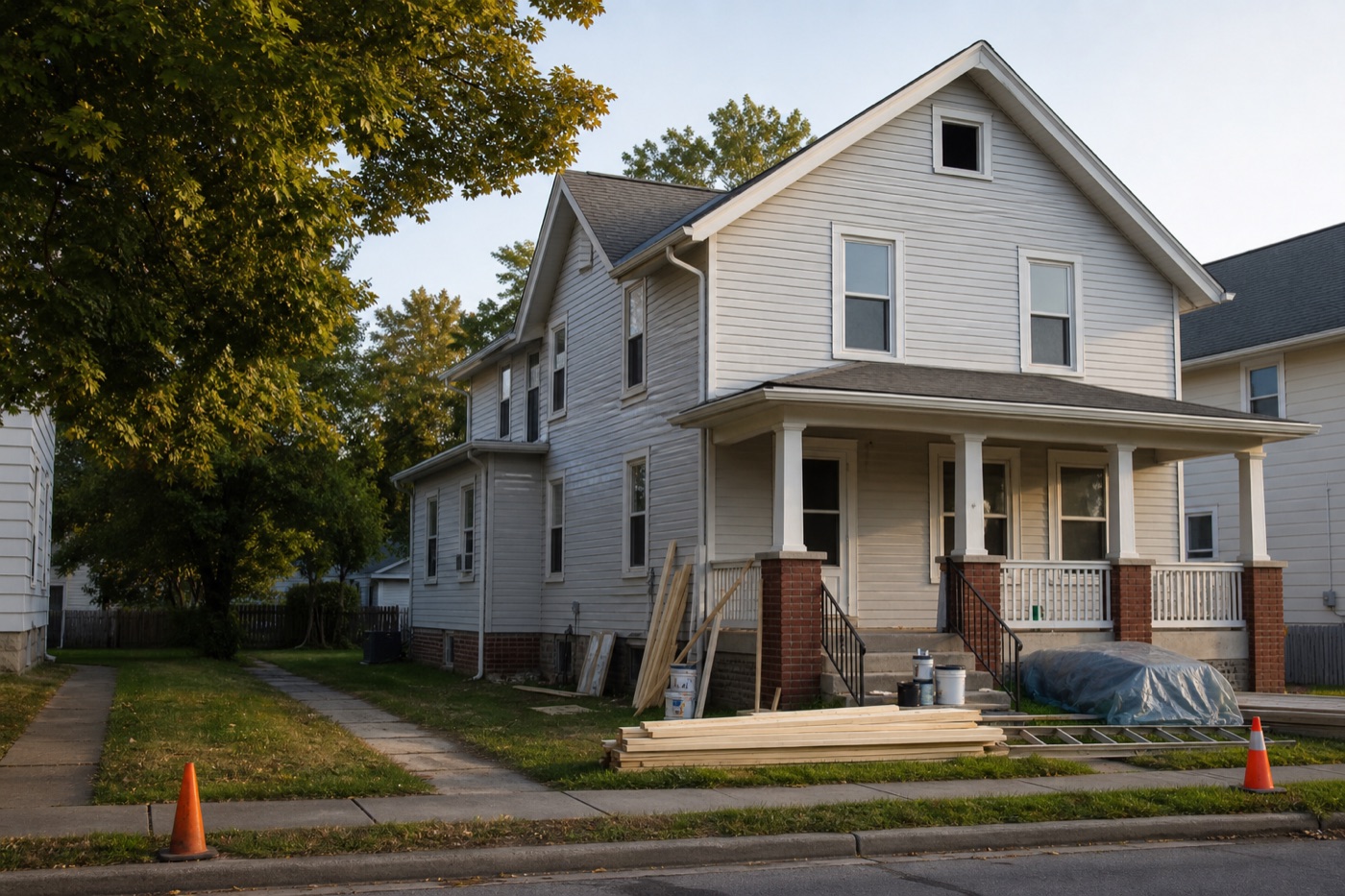
Ohio has quietly become one of the more active markets for rental property investors over the past several years. Cities like Columbus, Cleveland, Cincinnati, and Dayton continue to attract buyers drawn to relatively low acquisition costs and steady rental demand. For investors already holding Ohio rental properties, a DSCR refinance can serve a variety of purposes: pulling equity for a new acquisition, lowering the rate on an existing investment loan, restructuring debt across a portfolio, or transitioning out of a short-term bridge position into longer-term financing.
Getting from “I want to refinance” to actually receiving a term sheet, though, requires preparation. Lenders working in the DSCR space do not underwrite deals the same way a conventional bank underwrites a personal mortgage. The qualifying logic is different, the documentation requests are different, and the deal factors that matter most are different. Investors who approach a DSCR lender with a half-assembled file typically lose time waiting on revisions , or receive terms that shift once the full picture comes in. This article walks through what makes an Ohio DSCR refinance fundable and what you should have ready before requesting terms.
What DSCR Underwriting Actually Examines
DSCR stands for Debt Service Coverage Ratio. In its most direct form, it measures whether the income a property generates is sufficient to cover the proposed debt payment. The simplified calculation divides gross rental income by the total monthly debt obligation on the property , principal, interest, taxes, insurance, and sometimes HOA dues. A ratio above 1.0 means income exceeds the payment; a ratio below 1.0 means the property runs at a shortfall before any other expenses.
Lenders set their own DSCR thresholds, and those thresholds often vary depending on loan-to-value, property type, and borrower profile. What this means practically is that a lender reviewing your Ohio rental needs to know: what is the income, what will the payment be at the requested loan amount, and does the math work. Everything in the file either supports or complicates that calculation.
Unlike a W-2 mortgage, DSCR loans do not require the borrower to document personal income through tax returns or pay stubs , the property’s income does the qualifying work. That structure appeals to many investors, particularly those who write off significant depreciation and business expenses that would otherwise suppress their taxable income. AMZA Capital covers this distinction in more detail for investors who want a broader overview of how DSCR qualification works compared to traditional loan programs.
Property-Level Details That Need To Be Ready

Before a lender can quote terms on a DSCR refinance in Ohio, they need specific information about the subject property. Generalities will not get you to a term sheet.
Property Address And Type
The exact address allows the lender to confirm property location, pull comparable sales data, and assess the market. Rural properties, properties on large acreage, or properties in very low population areas may be outside a lender’s geographic appetite or may require additional justification. Confirming property type , single-family, two-to-four unit, five-plus unit multifamily , matters because loan programs, LTV limits, and documentation requirements often differ by asset type.
Current Appraised Or Estimated Value
The loan-to-value ratio on a refinance is calculated against the property’s current market value, not its purchase price. Ohio markets vary considerably , a duplex in a Columbus suburb trades differently than a single-family in a rural Appalachian county. If you have a recent appraisal, bring it. If not, be prepared to explain how you are arriving at your value estimate and what comparable sales support it. Lenders will order their own appraisal, but your initial file should reflect realistic assumptions.
Existing Mortgage Balance And Current Lender
For a rate-and-term refinance, the lender needs to understand the payoff amount on the existing loan. For a cash-out refinance, the payoff amount determines how much equity is available to extract while still staying within LTV limits. Know your approximate payoff, your current rate, and when your existing loan originated.
Rehab Or Improvement History
If you recently completed a renovation , a full gut rehab, a kitchen and bath update, a unit addition , document it. Before-and-after photos, contractor invoices, and permit records support an argument for a higher current value and help explain any significant gap between your acquisition price and the current estimate.
Rental Income Documentation
This is where many DSCR refinance files either perform well or fall apart. The income figure used for the DSCR calculation is not what you tell the lender you receive , it is what the file supports.
Executed Leases
If the property is leased, have executed lease agreements ready. Lenders review lease start and end dates, monthly rent amounts, and tenant information. Month-to-month tenancies sometimes raise questions about income stability. Long-term leases with strong rental history tell a better story.
Rent Roll
For properties with multiple units, a current rent roll showing unit-by-unit occupancy, lease terms, and monthly rents is standard. Keep it accurate and current.
Market Rent Analysis
If a unit is vacant or if rents are below market, lenders may work from a market rent analysis conducted by the appraiser rather than actual collected rents. Understanding what the appraiser is likely to determine for market rent in your Ohio submarket helps you set realistic DSCR expectations before submitting the file. According to the National Association of Realtors’ research and statistics, rental market conditions vary significantly at the metro and submarket level , which is exactly why local comparable data matters when lenders assess income.
Existing Operating Expenses
Property taxes in Ohio vary by county and can represent a meaningful share of operating costs. Insurance premiums, HOA dues if applicable, and flood insurance where required all factor into the debt service calculation. Know your current annual costs with specificity.
Borrower-Level Information Lenders Review

DSCR loans do not require income documentation in the traditional sense, but the borrower profile still matters. FICO score, liquidity, and real estate investing experience all influence how a lender prices and structures the loan.
Credit Score
Most DSCR programs have minimum credit score requirements. Scores above 700 generally access better pricing, while scores below 680 may narrow the field of lenders or push loan costs higher. If your score has shifted recently , in either direction , understand why before requesting terms.
Liquidity And Reserves
Lenders commonly require borrowers to demonstrate post-close reserves, often expressed as a specified number of months of the proposed payment. Reserves show that the borrower can service the debt through a vacancy or tenant turnover. Liquid assets in checking, savings, brokerage, or retirement accounts all typically count. Be ready to document them.
Real Estate Experience
Some lenders tier their programs based on the borrower’s existing portfolio size or years of investing experience. First-time investors may face different LTV caps or reserve requirements than experienced operators carrying several existing rental properties.
Entity Structure
DSCR loans are typically made to business entities , LLCs, corporations, or similar structures , rather than to individuals borrowing in their personal name. If you are holding the Ohio property in an LLC, have your entity documentation organized: articles of organization or incorporation, operating agreement, and the entity’s EIN.
Loan Purpose And Exit Plan Clarity
Lenders want to understand what you are trying to accomplish. A rate-and-term refinance to reduce payment burden is a different conversation than a cash-out refinance to fund additional acquisitions. If it is cash-out, how much are you looking to extract, and what will it be used for? Lenders are not asking to approve your use of funds, but loan purpose affects how they structure the transaction and what LTV limits apply.
Your exit plan matters even on a long-term DSCR loan. Are you holding this property indefinitely as a stabilized rental? Are you planning to sell within a specific window? Do you anticipate refinancing again once a value-add project is complete? Sharing that context helps the lender see the full picture rather than just the snapshot in front of them.
How To Avoid Wasting Time With An Incomplete File
The single most common reason investors lose time in the DSCR refinance process is presenting a file before the basic information is assembled. Lenders cannot issue terms in a vacuum. Requesting a quote with a vague property description, an uncertain rent figure, and no sense of current value creates a back-and-forth that delays the process and leads to misaligned expectations.
Before reaching out to AMZA Capital or any private lender, walk through your own file. Do you know the address, the estimated value, and the payoff balance? Can you produce the lease or rent roll? Have you pulled your credit score recently? Do you know your liquid reserves? Can you describe your exit plan in one or two sentences?
Investors who come in with specificity , even rough but honest specificity , move faster and get more accurate preliminary terms than investors who start vague and hope the lender fills in the gaps.
Ohio rental properties can be strong candidates for DSCR refinancing, particularly in markets with resilient rent demand and solid occupancy rates. But the deal has to pencil. Your file has to support the income, the value, and the borrower profile. Getting that foundation right before requesting terms is how experienced investors protect their time.
Related Guides
More guides from AMZA Capital:
- Fix And Flip Loans In Ohio: What Investors Should Prepare Before Requesting Terms
- Private Money Lenders In Ohio: How Investors Should Prepare A Fundable Deal
- Debt Service Coverage Ratio Loan: How Rental Property Cash Flow Shapes Underwriting
- DSCR Loan Rates
- DSCR Loan Lenders
- DSCR Loans in Florida
- All investor loan guides by state and program
START WITH AMZA CAPITAL’S FREE QUOTE PAGE.
*This article is provided for informational purposes only and does not constitute financial, legal, or investment advice. Loan availability, terms, and eligibility are subject to lender review and may change without notice. AMZA Capital | CA DFPI License 60DBO 86104 | NMLS 2262631.*
Author: AMZA Capital lending team. AMZA Capital operates under CA DFPI 60DBO 86104 and NMLS 2262631. This article is for informational purposes only and is not a commitment to lend.