By AMZA Capital
A Newark investor called last week about a property on South Orange Avenue. Purchase price: $85,000. After-repair value: $160,000. Solid numbers on paper. But when we pulled the tax records, this modest duplex carried a $14,600 annual property tax bill — roughly $1,220 per month in carrying costs before utilities, insurance, or loan payments. The deal went from profitable to problematic once we factored in New Jersey's reality: the highest property taxes in the United States.
This scenario plays out daily across New Jersey, where private money lenders evaluate deals differently than in states with reasonable tax burdens. Understanding what New Jersey private money lenders prioritize — and how Garden State-specific factors affect your approval odds — can mean the difference between funding your project or watching it slip away.
What New Jersey Private Money Lenders Evaluate First
Private money lenders in New Jersey start with the same fundamentals as lenders everywhere: credit score, experience, and deal structure. But New Jersey's unique market conditions create extra evaluation layers that catch unprepared investors off guard.
Property taxes dominate every analysis. In Bergen County, effective tax rates hover around 2.4% of assessed value. Hudson County runs slightly lower at 2.1%, while Essex County averages 2.8%. These percentages translate into massive monthly carrying costs that can destroy margins on otherwise solid deals. AMZA Capital has funded dozens of New Jersey projects, and we've learned that investors who fail to account for tax obligations upfront rarely survive to closing.
Credit requirements remain straightforward. Most New Jersey private money lenders, including AMZA, require FICO scores of 660 or higher for fix-and-flip loans. But experience requirements vary significantly. While many lenders demand one to two completed flips before approving loans, AMZA provides financing for first-time flippers on 1-4 unit properties — unusual flexibility in a market where experience typically determines access.
Debt-service coverage ratios matter intensely for rental property acquisitions. New Jersey's high property taxes mean rental income must cover significantly higher monthly obligations than comparable properties in Texas or Florida. AMZA requires DSCR of 1.25 or higher for optimal pricing, though we'll consider ratios between 1.00 and 1.24 with pricing adjustments. The math works differently when monthly property taxes consume 20-30% of gross rental income.
Loan-to-value ratios reflect the lender's confidence in both borrower and market. AMZA typically provides 75-95% LTV for standard fix-and-flip projects. Experienced borrowers with 10 or more completed projects in the prior three years can access 100% LTV financing — but only when deal metrics justify the increased exposure.
Key Documentation New Jersey Lenders Require

New Jersey private money lenders request standard documentation packages, but smart investors prepare extra materials that address state-specific concerns upfront.
Property tax records receive intense scrutiny. Lenders want current tax bills, assessment history, and any pending appeals or reassessments. New Jersey's complex assessment system means properties can face significant tax increases following improvements. Forward-thinking investors research recent comparable sales in their target area to estimate post-renovation assessments.
Flood zone determinations carry extra weight in coastal counties like Monmouth and Ocean. Hurricane Sandy's impact still influences lending decisions eight years later. Properties in flood zones face higher insurance costs that affect both carrying costs during renovation and future rental income projections. AMZA evaluates flood risk carefully, particularly for shore-area investments where insurance can exceed $500 monthly.
Construction estimates and contractor credentials matter more in New Jersey than many states. The Garden State's stringent building codes and permit requirements create delays and cost overruns that less experienced contractors struggle to navigate. Lenders prefer borrowers working with contractors who demonstrate New Jersey experience and proper licensing through the Division of Consumer Affairs.
Bank statements become essential for self-employed investors. New Jersey's high cost of living and property values mean many successful investors operate as self-employed flippers or rental property owners. AMZA offers bank statement loans specifically for these borrowers, using deposit history rather than traditional income documentation to verify repayment ability.
Proof of liquid reserves carries extra importance in high-tax states. The standard recommendation suggests maintaining 35% of purchase price for down payment, closing costs, carrying costs, and contingency buffer. In New Jersey, that 35% often represents the minimum viable cushion rather than a comfortable margin.
How New Jersey Property Taxes Affect Lending Decisions
New Jersey's property tax burden fundamentally alters deal analysis for both borrowers and lenders. Understanding this impact helps investors prepare stronger applications and set realistic expectations.
Carrying cost calculations change dramatically. A $200,000 purchase in Morris County might carry $16,000 in annual property taxes, creating $1,333 in monthly tax obligations before any other expenses. Combined with hard money loan payments, insurance, and utilities, monthly carrying costs often exceed $3,000 during renovation periods. These numbers require larger cash reserves and shorter timeline expectations.
Debt service coverage ratios become harder to achieve on rental properties. That same Morris County property, if purchased as a buy-and-hold investment, needs to generate roughly $4,000 in monthly rent to achieve a 1.25 DSCR when property taxes consume $1,333 monthly. Market rents must support these higher thresholds, or deals simply don't work.
Exit strategy viability requires careful analysis. Fix-and-flip projects must account for end buyers' carrying costs when setting sale prices. Retail buyers factor property taxes into affordability calculations, potentially limiting the pool of qualified purchasers for high-tax properties. AMZA evaluates local sale velocity and price trends to ensure realistic exit assumptions.
Cash flow projections for buy-and-hold properties become more conservative. New Jersey rental properties rarely generate significant positive cash flow without substantial down payments. Lenders adjust their risk assessments accordingly, often requiring larger equity positions or higher rental income multiples than in lower-tax states.
New Jersey Market Considerations For Different Regions
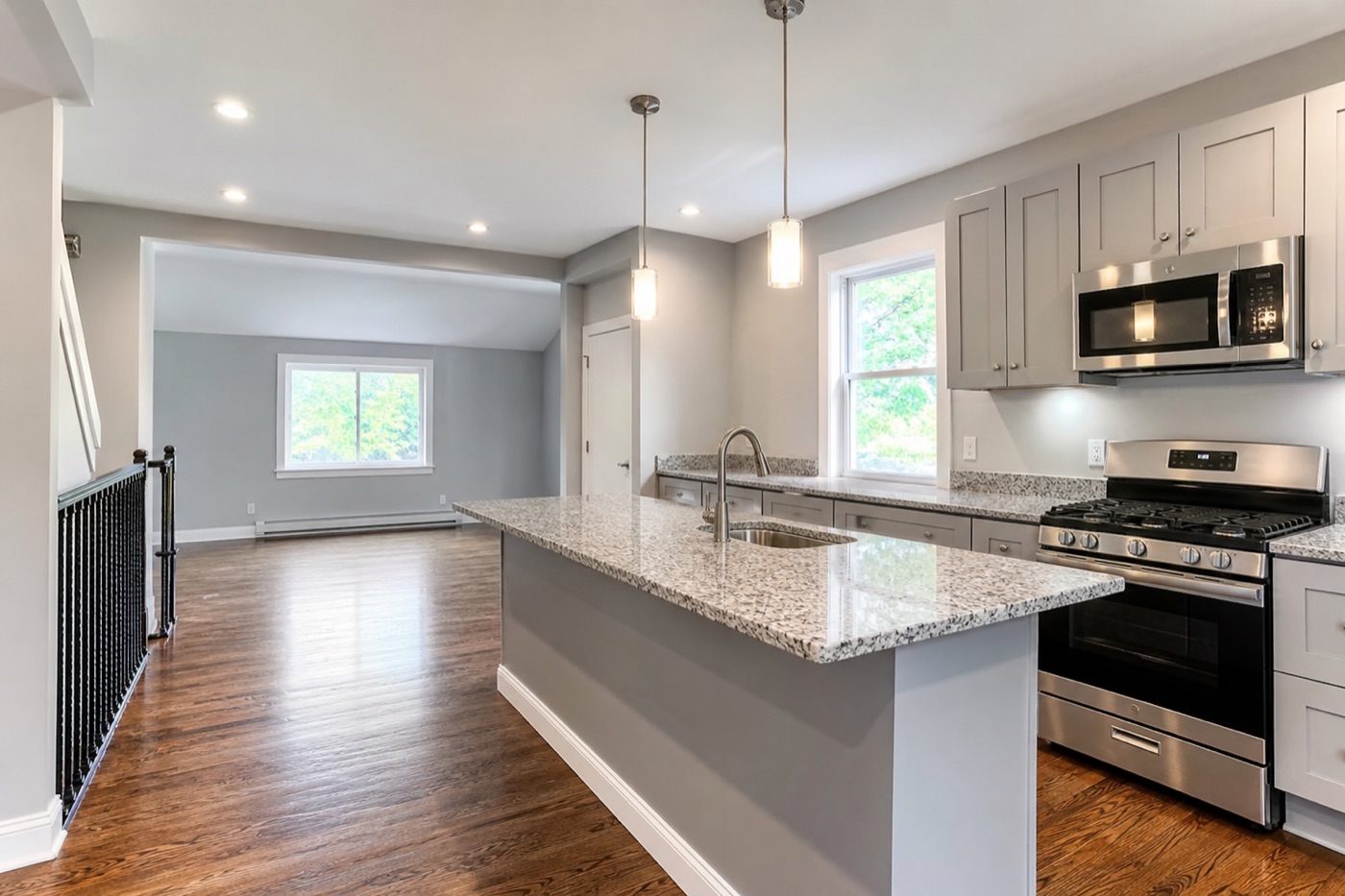
New Jersey's diverse real estate markets create distinct lending considerations depending on investment location. Private money lenders adjust their criteria based on regional characteristics and risk profiles.
Urban markets like Newark, Jersey City, and Trenton offer lower entry prices but present unique challenges. Properties under $100,000 attract fix-and-flip investors, but renovation costs often exceed initial estimates because of deferred maintenance and code compliance issues. AMZA's minimum purchase price of $75,000 accommodates these urban opportunities while maintaining underwriting standards. Lenders in these markets prioritize contractor experience and realistic renovation budgets.
Suburban markets in Bergen, Essex, and Morris counties provide stability but require larger capital commitments. Properties typically start around $300,000, with luxury rehabs exceeding $600,000. Higher purchase prices mean larger down payment requirements and increased carrying costs during renovation. However, end buyer demand remains strong because of school districts and commuter access to Manhattan.
Shore communities from Sandy Hook to Cape May present seasonal considerations that affect both rental income projections and exit timing. Summer rental income can offset high carrying costs, but shoulder seasons create cash flow gaps. Hurricane and flood risks increase insurance costs and limit some lender participation. Properties in flood zones often require specialized insurance policies that can double standard homeowners coverage costs.
Proximity to New York City and Philadelphia drives investor demand but creates competition for quality properties. Multiple offer situations become common, pushing purchase prices higher and compressing margins. Successful investors in these markets often need pre-approval letters and quick closing capabilities to remain competitive.
Common Mistakes That Delay New Jersey Approvals
Experienced New Jersey private money lenders identify recurring mistakes that slow or derail loan approvals. Avoiding these pitfalls accelerates the funding process.
Underestimating property tax implications ranks as the most frequent error. Investors calculate renovation costs and sale prices without properly accounting for monthly tax obligations during the project. They request loan amounts based on optimistic timelines that ignore carrying cost realities. AMZA reviews tax records early in the process to identify potential issues before they derail approvals.
Inadequate liquid reserves create funding delays when lenders discover borrowers lack sufficient cash cushions. New Jersey's high costs require larger contingency funds than investors expect. The 35% rule — maintaining 35% of purchase price for down payment, closing, carrying, and buffer — represents a starting point rather than a maximum in high-tax markets.
Poor contractor selection generates project delays and cost overruns that strain borrower resources. Out-of-state contractors unfamiliar with New Jersey building codes and permit processes create unnecessary complications. Lenders prefer borrowers who work with contractors demonstrating local experience and proper licensing credentials.
Unrealistic timeline expectations cause problems when renovation projects extend beyond initial estimates. New Jersey's permit approval processes and inspection requirements add time to standard renovation schedules. Weather delays during winter months further extend timelines. Conservative scheduling prevents cash flow problems and maintains lender confidence.
Incomplete documentation packages slow the approval process when lenders must request information multiple times. New Jersey transactions involve complex property tax records, flood determinations, and municipal requirements that out-of-state investors often overlook. Thorough preparation demonstrates professionalism and expedites underwriting.
Preparing For The New Jersey Application Process
Successful New Jersey private money loan applications require preparation that addresses state-specific requirements and market conditions. Following these steps improves approval odds and speeds funding timelines.
Research property tax obligations thoroughly before making offers. Review current tax bills, assessment history, and recent comparable sales that might trigger reassessments. Factor monthly tax costs into both renovation budgets and exit strategy calculations. Properties with tax appeals pending or assessments below market value present extra risks that require disclosure.
Establish relationships with qualified New Jersey contractors before needing financing. Interview contractors about their experience with local building codes, permit processes, and inspection procedures. Request references from recent projects in your target market. Contractors who understand New Jersey requirements can provide more accurate estimates and realistic timelines.
Prepare comprehensive financial documentation that addresses self-employment income if applicable. New Jersey's entrepreneurial investor community often operates without traditional W2 income. Bank statement loans provide alternatives, but borrowers must organize financial records that demonstrate consistent deposit patterns and cash flow stability.
Calculate realistic reserve requirements based on New Jersey market conditions. Start with the 35% guideline but adjust for local factors like property taxes, insurance costs, and permit fees. Shore area properties require flood insurance considerations. Urban properties might need environmental assessments. Suburban properties could face HOA requirements.
Connect with experienced private money lenders who understand New Jersey markets. AMZA Capital's track record funding Garden State projects means we recognize the unique challenges and opportunities investors face. We've developed underwriting processes that account for New Jersey's high property taxes, diverse markets, and regulatory environment.
Ready to explore your New Jersey investment financing options? START WITH AMZA CAPITAL'S FREE QUOTE PAGE.
For more information about our fix and flip financing programs or to explore additional investment property financing options, contact our team directly. We understand New Jersey's challenging market conditions and structure loans that work with local realities.
Market data supports continued investment opportunities in New Jersey despite high carrying costs. According to the National Association of Realtors, proximity to major metropolitan areas and limited land availability create long-term appreciation potential that justifies current investment levels.
Disclaimer: This content is provided for informational purposes only and does not constitute financial, legal, or investment advice. AMZA Capital is a licensed mortgage lender (CA DFPI 60DBO 86104 | NMLS 2262631). Actual loan terms, rates, and availability vary. Consult a licensed financial professional before making investment decisions.