
Hard Money Loans in Georgia
Understanding A Hard Money Loan In Georgia
Georgia’s real estate market moves fast. Whether you’re pursuing a distressed single-family flip in Atlanta’s West End, a mixed-use value-add in Savannah, or an unconventional commercial property type that traditional lenders won’t touch, the financing timeline can make or break a deal. Hard money loans , asset-based bridge loans funded by private capital rather than institutional underwriting committees , are often the tool that keeps acquisition and renovation timelines on track when conventional credit is unavailable or simply too slow.
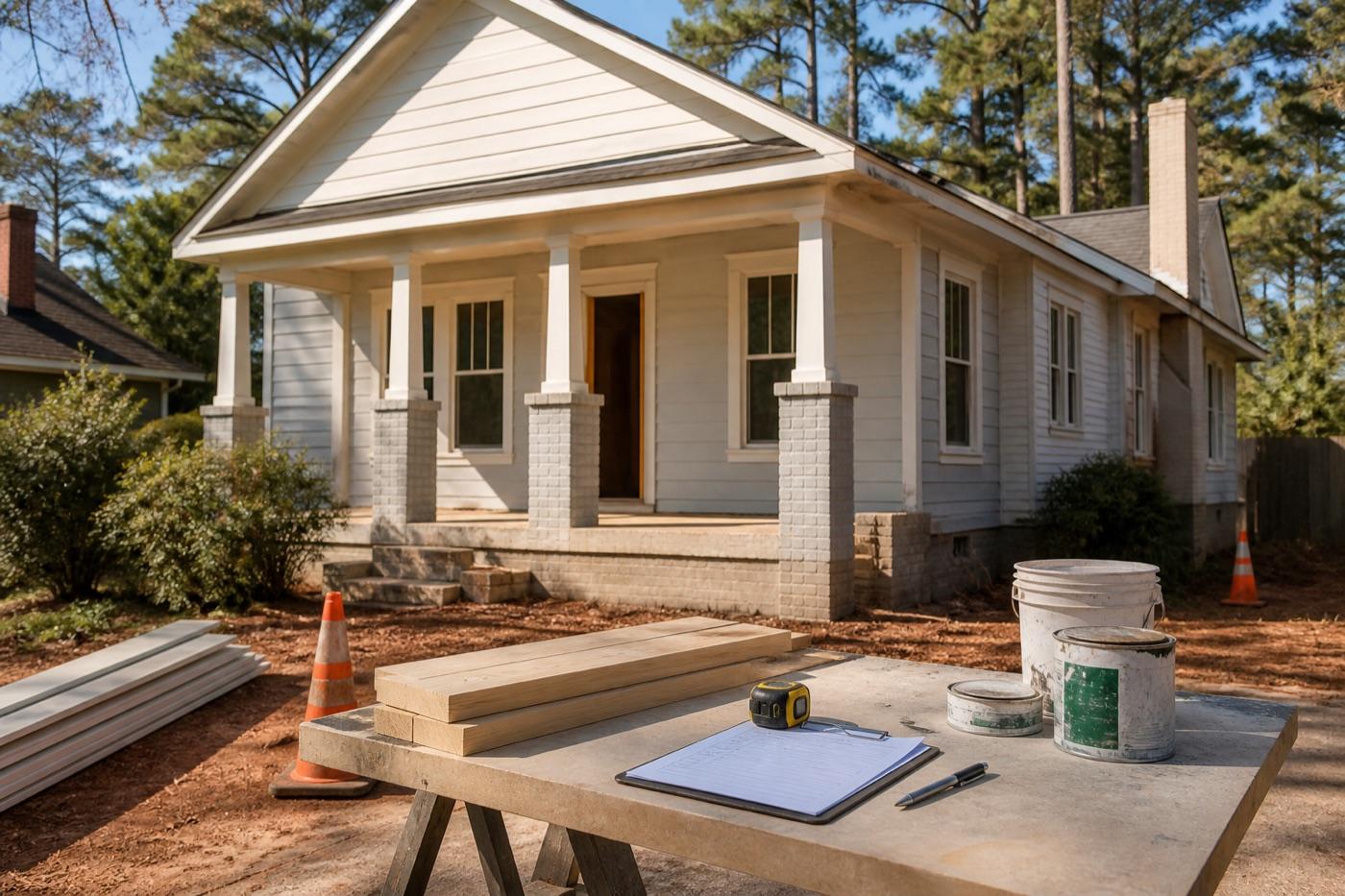
This page covers how hard money lending works in Georgia, what distinguishes a specialty bridge loan from a conventional rehab line, and how AMZA Capital approaches the harder-to-place scenarios that most lenders decline.
Why Georgia Real Estate Investors Turn To Hard Money
Georgia is one of the more active states for residential and commercial investment activity. Metro Atlanta continues to attract population growth, and secondary markets , Columbus, Augusta, Macon, and the coastal corridors , have each seen increased investor interest over the past several years. That demand creates opportunity, but it also creates competition, and competition means sellers expect quick closings.
Conventional bank loans require full income documentation, appraisals, environmental reviews, and multi-layered approval chains. For a borrower buying a distressed property at auction, acquiring through a short sale, or funding a renovation on a tight schedule, that timeline is a structural mismatch. Hard money lenders underwrite primarily on the asset , specifically, the as-is or after-repair value of the property , and move through credit review, title work, and funding on a compressed schedule.
There’s also a borrower-profile dimension. Self-employed investors, those with seasoning issues on a prior credit event, or experienced operators whose capital is tied up in other projects often find that bank underwriting criteria don’t fit their situation , even when the deal itself is sound. Asset-based lending exists precisely to bridge that gap.
What Makes A Specialty Bridge Loan Different

A standard hard money loan is collateral-first: the lender’s primary question is whether the property secures the loan adequately if the borrower defaults. A specialty bridge loan narrows that focus further to situations that even some hard money lenders decline , unusual property types, borrowers with significant credit challenges, or scenarios where deal structure or collateral type requires a genuinely case-by-case review.
AMZA Capital’s specialty bridge program is built around exactly this profile. The program is designed for bad credit and hard-to-place property types, including event centers, churches, gentlemen’s clubs, marijuana facilities, and similar uses that trigger automatic declines at most lenders. These properties often represent legitimate investment opportunities , undervalued assets in established locations, value-add plays with genuine upside , but their collateral characteristics don’t fit neatly into standard loan matrices.
The program operates on 12- to 36-month terms and carries loan-to-value ratios in the 50–60% range. Interest rates fall in the 12–16% range (rates as of July 24, 2026, per owner-provided data). That LTV structure reflects the elevated risk associated with specialty collateral: by maintaining a meaningful equity cushion, the lender protects itself and, in turn, can underwrite property types and credit profiles that would otherwise find no financing at all.
Understanding The Underwriting Logic
When you approach a hard money lender in Georgia, understanding how they think about risk helps you prepare a stronger package and have a more productive conversation.
Collateral value is primary. The lender wants to understand what the property is worth today, on a conservative liquidation basis. For a specialty property , say, a former church being converted to event space , that means thinking through comparable sales, the depth of the local buyer pool for that asset type, and realistic marketing timelines if the lender ever had to sell. Expect a meaningful discount applied to specialty collateral precisely because it is harder to move.
LTV is your most important number. At 50–60% LTV, the borrower needs to bring real equity to the table. On a $500,000 property, that means the loan would be $250,000–$300,000. If you’re purchasing at distressed pricing, that equity can come from the discount itself. If you’re refinancing, you need sufficient accumulated equity or paid-down basis.
Credit and borrower background still matter. Even in an asset-based program, the lender is evaluating the borrower’s willingness and ability to manage the asset, execute the business plan, and service the debt during the term. Credit history is reviewed case by case , the specialty bridge program accommodates bad credit, but “accommodates” means the lender looks at the full picture and prices for risk, not that credit is irrelevant.
Exit strategy is critical. Hard money is short-term capital. The lender needs to understand how you plan to repay within the term , typically through a sale, a refinance into permanent financing, or a refinance into a longer-term commercial product. A clear, realistic exit that matches the property type and market conditions materially reduces the lender’s perceived risk.
Georgia Licensing And Regulatory Context

Georgia regulates mortgage brokers, lenders, and originators through the Georgia Department of Banking and Finance. Investors working with any lender in the state should confirm that the lender holds appropriate state licensing and federal registration. You can review Georgia’s licensing requirements through the Georgia Department of Banking and Finance.
AMZA Capital is licensed under the California Department of Financial Protection and Innovation (CA DFPI license 60DBO 86104) and registered with the Nationwide Multistate Licensing System (NMLS 2262631). Georgia is among the states where AMZA Capital’s specialty bridge program is available.
Property Types That Fit This Program
Part of what defines a specialty bridge loan is the willingness to look seriously at property types that most lenders categorize as ineligible without further review. AMZA Capital’s program was specifically built to accommodate:
- Event centers and banquet halls , properties with limited comparable sales and income streams that are difficult to underwrite on a stabilized-cap basis
- Religious facilities and churches , former or active, whether being repositioned or refinanced in place
- Adult entertainment venues , properties with use restrictions and stigma that most institutional lenders will not touch
- Cannabis-adjacent facilities , including cultivation, processing, and retail spaces in jurisdictions where the use is legally permitted
- Other hard-to-place commercial types , the program reviews cases individually rather than declining by category
This is not an exhaustive list. The underlying principle is that AMZA Capital applies genuine underwriting judgment to situations that don’t fit a standard checklist. If you have a deal that has been declined because of the property type, it’s worth a conversation.
How To Position Your Deal For A Hard Money Review
Experienced hard money borrowers know that preparation accelerates the review process and produces better conversations with lenders. Before you approach any private lender for a specialty bridge loan, pull together the following:
On the property: Address and legal description, current use, your estimated as-is value and the basis for it (recent comps, broker opinion, or appraisal), any known title issues, deferred maintenance, environmental concerns, or encumbrances.
On your business plan: What are you acquiring this property to do? If it’s a renovation, what’s the scope and budget? If it’s a repositioning play, what’s the timeline to stabilized income or to a sale? What comparable transactions support your projected value or income?
On your exit: How will you repay the loan? If it’s a sale, what is your evidence of buyer demand? If it’s a refinance, which lender type would take you out, and have you had a preliminary conversation?
On yourself: Your real estate background, any prior hard money or commercial loans you’ve taken and repaid, and your current credit situation. You don’t need a pristine credit file to work with a specialty bridge program, but transparency about where you stand lets the lender structure appropriately.
Working With A Private Lender Vs. A Mortgage Broker
Some Georgia investors work directly with hard money lenders; others use mortgage brokers who specialize in placing investment deals. Both paths can work. Lenders like AMZA Capital have the advantage of clarity , you know the product, pricing, and decision criteria directly from the source, without an intermediary layer. If you have a deal that doesn’t fit standard templates, going directly to the lender that wrote the program is often the most efficient path.
If you’re navigating a more complex capital stack , say, layering a hard money first mortgage with a mezzanine piece or a seller-carry second , an experienced commercial mortgage broker who understands private capital can be useful. Just ensure that any broker you work with holds appropriate Georgia licensure and can demonstrate specific experience with asset-based lending transactions.
Taking The Next Step
Georgia’s investment landscape rewards speed, creativity, and the ability to access capital for deals that don’t fit conventional templates. A specialty bridge loan through AMZA Capital is one tool for investors working in that space , whether the challenge is an unusual property type, a credit history that doesn’t satisfy bank underwriting, or simply a timeline that conventional financing cannot meet.
Understanding the program parameters , 50–60% LTV, 12–36 month terms, case-by-case review for hard-to-place property types and credit situations , lets you assess quickly whether a given deal is in range before spending time on a full application. If it looks like a fit, the fastest way to get a real answer is to submit your deal details directly.
For AMZA Capital’s specialty bridge program, rates range from 12% to 16% as of July 24, 2026, and are subject to change. Rates vary based on FICO, borrower experience, property cash flow, and location.
Related Guides
More guides from AMZA Capital:
- DSCR Loans in Georgia
- Bridge Loans in Georgia
- Hard Money Loan Rates
- Hard Money Loan Documents
- 100 Percent Fix And Flip Financing: When Experienced Investors May Qualify
- Hard Money Loans in Ohio
- All investor loan guides by state and program
START WITH AMZA CAPITAL’S FREE QUOTE PAGE.
This article is for informational purposes only and does not constitute financial or investment advice. AMZA Capital is a licensed mortgage lender (CA DFPI 60DBO 86104 | NMLS 2262631). Consult a licensed professional before making financial decisions.