
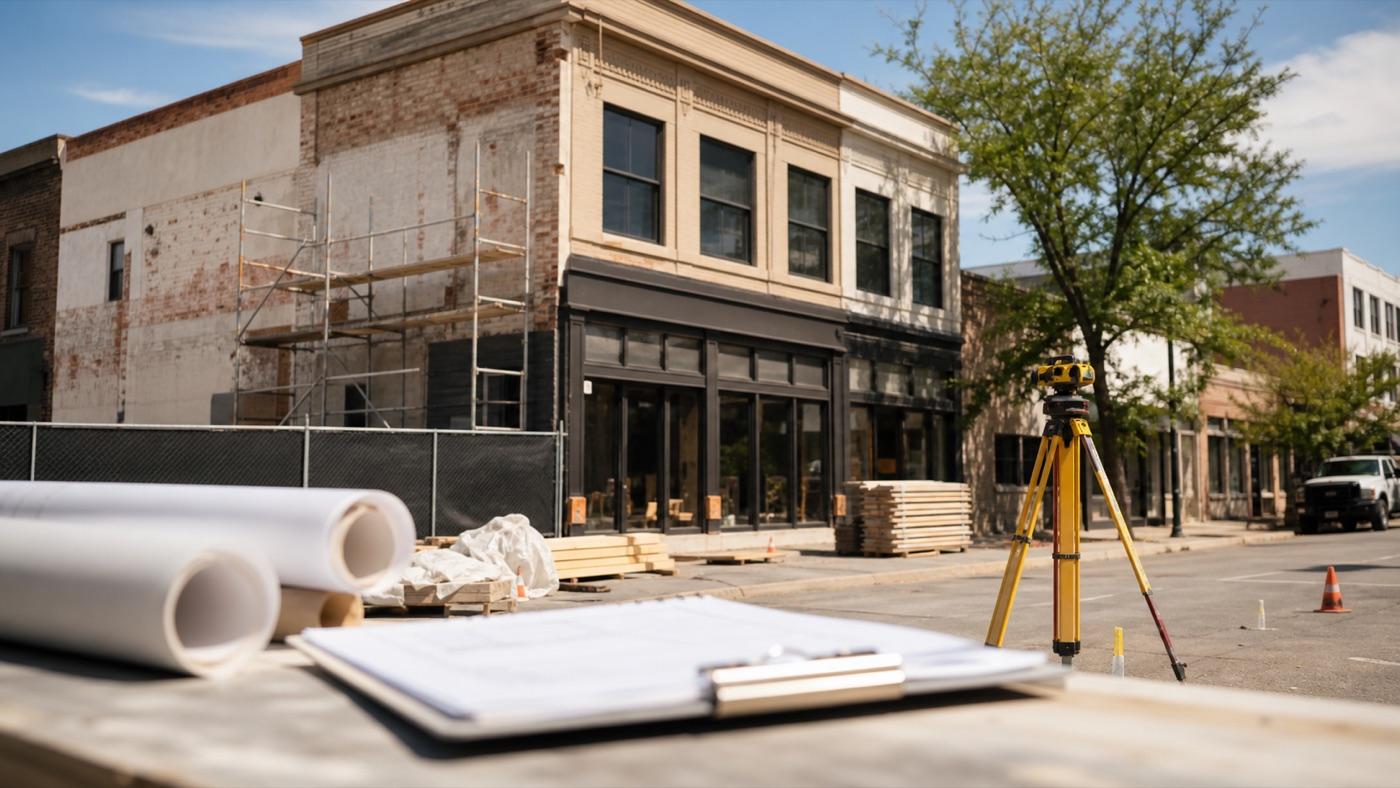
Fix and flip financing moves fast , but only when the deal is prepared correctly before you make the first call to a lender. Borrowers who treat the financing conversation as the starting point of their due diligence routinely burn time, miss closings, and leave money on the table. The investors who close efficiently are the ones who arrive with a tight file, realistic numbers, and a clearly articulated exit. This article breaks down exactly what that preparation looks like so you can position your next rehab deal to fund.
Why Lenders Underwrite Differently Than Banks
Private and bridge lenders focus on asset value and deal economics rather than the borrower’s W-2 history. That makes fix and flip financing more accessible for self-employed investors, LLCs, and borrowers with non-traditional income , but it does not mean underwriting is loose. A competent private lender is still stress-testing your numbers. They want to know whether the property can support the loan in a worst-case scenario and whether you have the experience and liquidity to execute the plan you’ve presented.
That evaluation starts with the property itself, runs through your rehab assumptions, and ends with a credible exit. Every element of your file should answer one question: if this deal goes sideways, where does the lender stand? When you understand that question, you understand what to prepare.
Start With A Specific Property Address And Clear Loan Purpose

A vague inquiry , “I’m looking at a house somewhere in Phoenix, maybe $300K purchase, not sure on the rehab yet” , cannot produce a term sheet. Lenders need a specific property address because everything else flows from it: the county recording environment, local market liquidity, zoning, flood zone designation, and the comparable sales that will anchor the ARV.
Alongside the address, be explicit about loan purpose. Is this a purchase-rehab loan that needs to close in ten days? A refinance out of a hard money position you used to acquire the property? A cash-out refinance on a stabilized asset you already own? The structure of the loan changes the documentation required, the leverage available, and the timeline. Lenders at AMZA Capital (CA DFPI 60DBO 86104, NMLS 2262631) need to understand the transaction type upfront before they can begin modeling terms. You can start that conversation at AMZA Capital’s free quote page to get the process moving.
Anchor Your Numbers To A Defensible ARV
After-repair value is the single most important number in fix and flip financing. It determines how much a lender will advance, and it determines your profit margin on exit. Lenders will order their own appraisal or broker price opinion, but presenting a well-supported ARV from the start tells them you understand the market and reduces the chance of a surprise revaluation that blows up your leverage.
To build a defensible ARV, pull at least three comparable sales within the last six months, ideally within a half-mile radius, in similar condition and square footage to your renovated property. If the market is thin or rural, you may need to extend the radius or the time window , but document why. Note the condition adjustments you’re making, because a comp that sold partially updated is not the same as a fully renovated flip. When you can show that your ARV conclusion is conservative and supported by real transaction data from sources like the National Association of REALTORS® research and statistics, you reduce underwriting friction and signal that you’re a credible operator.
Build A Realistic, Itemized Rehab Budget
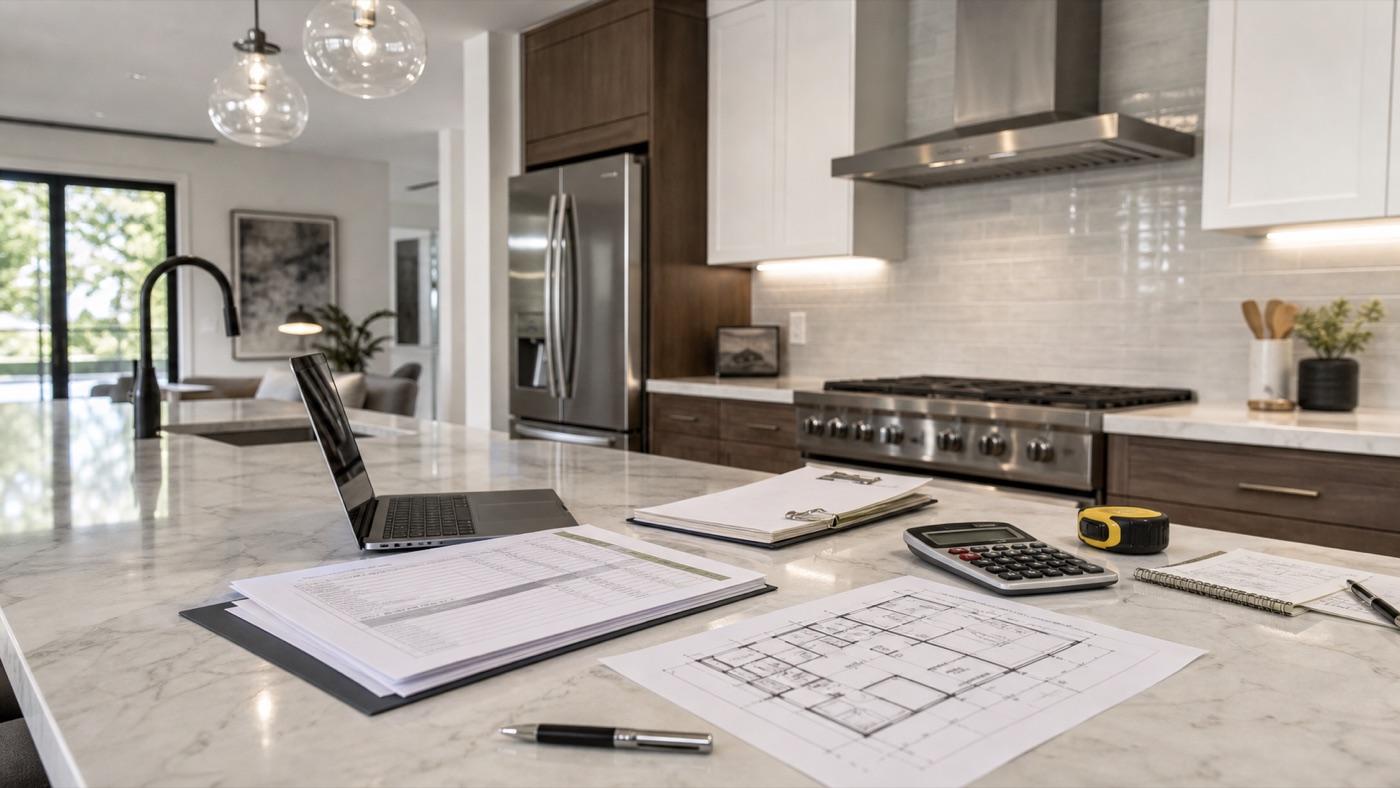
A rehab scope that reads “general updates, $40K” is not a rehab scope , it’s a placeholder. Lenders who fund construction draws want to see a line-item breakdown: demo, framing, roofing, HVAC, plumbing, electrical, insulation, drywall, flooring, kitchen, bathrooms, paint, landscaping, and any deferred maintenance items the inspection revealed. Each line should carry a dollar amount and, for larger items, contractor bids or allowances based on recent local pricing.
The budget has to reconcile with the ARV spread. If you’re buying at $200,000, putting $80,000 into rehab, and projecting an ARV of $340,000, the math needs to hold up against local construction costs and comparable renovation expenditures. Experienced lenders have seen hundreds of rehab projects and they will push back on a kitchen remodel budgeted at $4,000 in a market where cabinets alone run $8,000. Come in with numbers you can defend.
Also factor contingency. Most experienced operators build in 10–15% above their base budget. Showing that you’ve thought through cost overruns signals project management maturity. Showing that your deal still works with a 15% cost overrun signals that you haven’t underwritten to a best-case outcome.
Document The Purchase Price And Current Ownership Structure
If the property is under contract, provide the signed purchase agreement, including any addenda. If you’re refinancing out of an existing position, provide the recorded deed and the current loan statement. Lenders need to understand what you paid, what you owe, and what the current market value is relative to your acquisition basis.
Ownership structure matters too. Are you purchasing in your own name or through an LLC? If the entity is newly formed, be prepared to explain that, because many lenders have seasoning or organizational requirements for entity-held loans. Have your operating agreement and EIN documentation ready. These are not unusual requests , they’re standard compliance and title requirements.
Be Straightforward About FICO And Credit History
Private lenders for fix and flip deals do not rely solely on credit scores the way conventional mortgage lenders do, but credit still factors into the underwriting picture. A FICO score gives a lender a fast read on how you manage financial obligations generally. Most active fix and flip lenders have minimum score thresholds, though those vary by program and deal profile.
More important than hitting an exact number is being honest about what’s in your file. If you have a recent late payment, a medical collection, or a previous short sale, disclose it early with context. Surprises discovered during underwriting create delays and sometimes kill deals outright. Lenders can often work around adverse credit history when the deal economics are strong and the borrower is transparent , but not when they’re finding out about the issue for the first time mid-underwriting.
Demonstrate Liquidity And Reserves
Fix and flip lenders want to know you can close and carry the project. That means demonstrating that you have enough liquid assets to cover your down payment, closing costs, and a reasonable reserve cushion if construction runs long or the property takes extra time to sell. Two to three months of carrying costs in accessible, liquid accounts is a reasonable baseline expectation, though specific requirements vary by lender and deal.
Bank statements for the last two to three months are typically the standard document. If your liquidity is spread across multiple accounts or includes retirement funds, investment accounts, or a business operating account, aggregate the picture and be prepared to source any large deposits. Lenders aren’t trying to make this complicated , they’re making sure your project won’t stall at the 60-day mark because you ran out of operating capital.
Articulate Your Exit Strategy
Every fix and flip loan is a short-term instrument, usually six to eighteen months depending on the project scope and the lender’s program. Before that term expires, you need to sell the property or refinance into longer-term financing. Lenders want to hear which path you intend to take and why it’s realistic.
If you’re selling, what’s your target list price relative to ARV, who is the buyer pool for that price point, and how does current market absorption look in that neighborhood? If you’re keeping the property and refinancing into a rental, do you have a sense of the stabilized rents and whether the property will qualify for a DSCR loan? AMZA Capital has published a detailed guide on what investors should prepare for DSCR loans that is worth reviewing if a rental hold is your exit.
An exit strategy isn’t a guarantee , markets move and timelines shift. But investors who can articulate a primary exit and a backup exit demonstrate that they’ve stress-tested the deal rather than just hoping the flip works.
Organize Your Track Record
First-time flippers can still obtain fix and flip financing, but experienced investors close at better terms and with less friction. If you have a track record, document it. A simple spreadsheet showing prior projects , address, purchase price, rehab cost, sale price, and timeline , is more persuasive than a verbal summary. It shows you’ve done this before, that your numbers are calibrated to reality, and that you understand what a rehab project actually demands operationally.
If you’re newer to investing, lean harder on the strength of the deal, your contractor relationships, your liquidity, and any mentorship or partnership arrangements that reduce the lender’s risk profile.
Bring The File Together Before You Make Contact
The investors who get the fastest, most actionable responses from lenders are the ones who arrive prepared. That means having the property address, purchase agreement or deed, purchase price, estimated ARV with comp support, itemized rehab budget, exit strategy, entity documents if applicable, credit context, and two to three months of bank statements ready to share. A complete file isn’t a bureaucratic hurdle , it’s the difference between a term sheet on day one and a two-week back-and-forth that eats into your due diligence window.
Fix and flip financing is designed to move quickly. Preparation is what lets it.
START WITH AMZA CAPITAL’S FREE QUOTE PAGE.
*This article is provided for informational purposes only and does not constitute legal, financial, or investment advice. Loan programs, terms, and availability are subject to change and vary by transaction. All lending decisions are subject to underwriting review and approval. AMZA Capital | CA DFPI License 60DBO 86104 | NMLS 2262631.*