
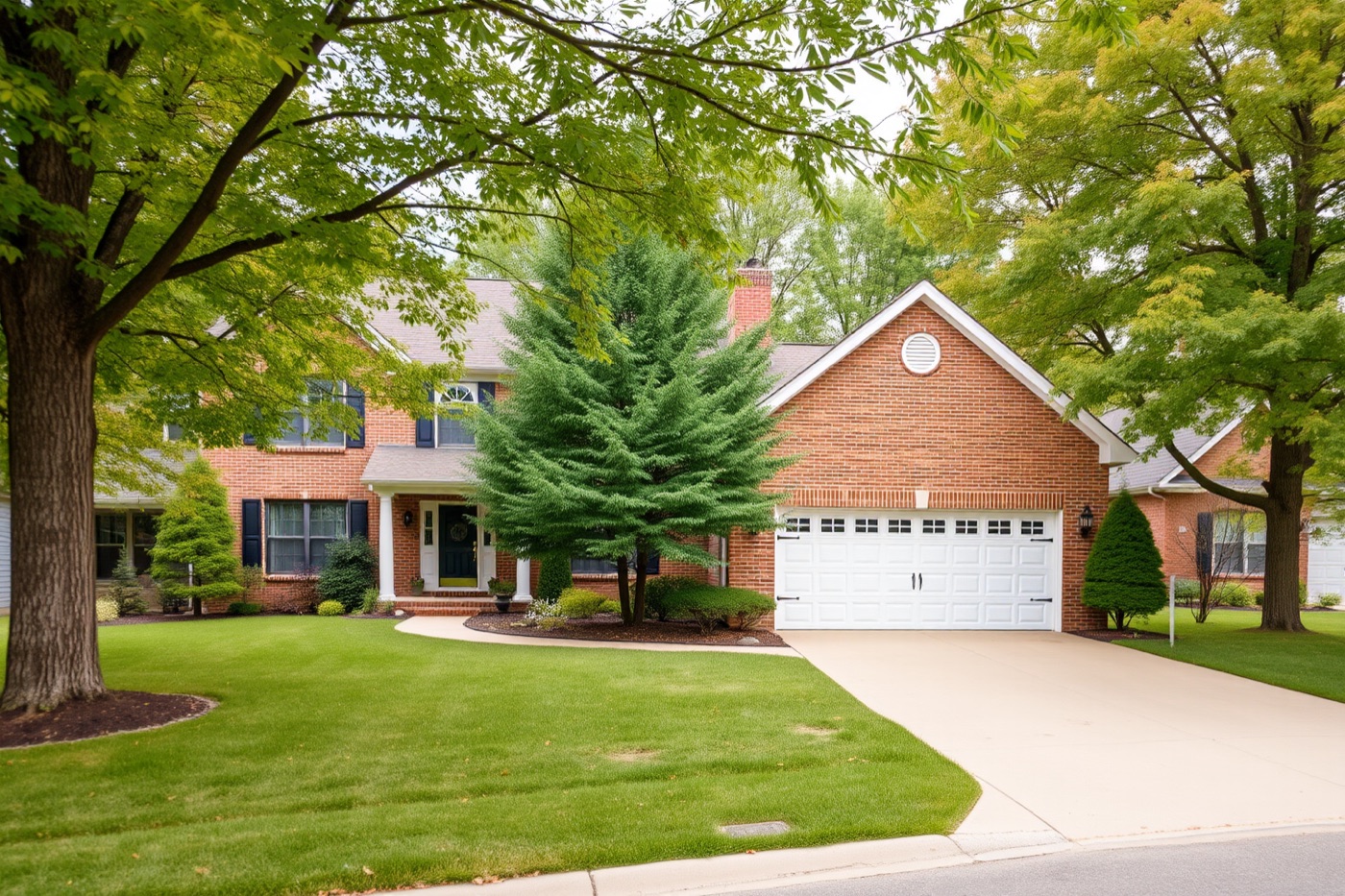
Ohio has quietly become one of the more attractive states for real estate investors who rely on private capital. Markets like Cleveland, Columbus, Cincinnati, Dayton, and Akron offer price points that pencil on both fix-and-flip and buy-and-hold strategies, and the state’s broad geographic spread means opportunities range from urban infill redevelopment to suburban BRRRR plays to small-town rental consolidation. That variety is precisely why investors searching for private money lenders in Ohio need to walk into a financing conversation well-prepared. A lender cannot size a loan, quote a rate, or structure a term without first understanding the deal , and the borrower’s ability to execute it.
This guide walks through every element of a fundable file so that Ohio investors can approach a private lender conversation with confidence.
Why Private Money Works Differently In Ohio
Private money lenders , also called hard money lenders , underwrite primarily against the asset rather than the borrower’s long-term employment history. That distinction makes private capital uniquely suited to time-sensitive acquisitions, distressed properties that won’t qualify for conventional financing, and investors who hold properties in LLCs or other business entities. In Ohio specifically, the combination of relatively affordable purchase prices and strong rental demand in secondary cities has drawn a significant wave of investors who cycle capital quickly and need lenders that can match that pace.
Speed, though, does not mean sloppiness. Any reputable private lender reviewing an Ohio deal will ask the same core questions a conventional underwriter would , they will simply weigh the answers differently and prioritize the property’s collateral position over a 30-year amortization schedule.
The Property: Address, Condition, And Comparable Support

Everything begins with a specific property address. Without it, no credible lender can even begin a preliminary review. The address unlocks county records, tax history, prior sale prices, zoning classification, flood zone status, and comparable sales data , all of which shape the lender’s initial read on collateral quality.
After address comes condition. Private lenders in Ohio need to understand whether they are looking at a stabilized, rentable asset or a property requiring significant rehabilitation. That distinction drives the loan structure. A stabilized duplex in Columbus commands a different product than a vacant single-family home in Youngstown with a compromised roof and outdated electrical. Neither is automatically unfundable , but they require completely different collateral analyses, draw structures, and risk assessments.
Comparable sales support matters more than most borrowers realize. An investor’s verbal assertion that a property is “worth” a certain amount carries little weight without recent, geographically proximate sales of similar properties. In Ohio markets with thin sales volume , a common condition in rural or tertiary markets , finding clean comps requires extra diligence. Bring at least three comparable closed sales within the last six to twelve months, and be prepared to explain any adjustments for condition, square footage, or amenity differences. When the ARV (after-repair value) is stretched, a lender will pull back on proceeds. Solid comp support is the investor’s strongest argument for a higher valuation.
Investors seeking broader market context on Ohio real estate trends can reference data published by the National Association of REALTORS®, which tracks median prices, days on market, and inventory levels that provide useful context for both flip timelines and rental demand assumptions.
The Rehab Scope: Specificity Over Estimates
For any acquisition that involves renovation , whether a light cosmetic refresh or a full gut rehabilitation , lenders need a detailed scope of work. “Needs updating” is not a scope of work. A fundable file includes itemized line items: kitchen and bath costs, flooring, HVAC, roof, electrical, plumbing, windows, paint, and any structural work. Each line item should carry a dollar figure tied either to contractor bids or reasonably documented cost-per-square-foot assumptions.
In Ohio, construction costs vary meaningfully between markets. Labor rates in Cleveland’s urban core differ from those in smaller markets like Mansfield or Lima, and material costs can fluctuate significantly depending on supply chain conditions at the time of the project. A scope that reflects current, local pricing demonstrates that the investor has done the homework , and gives the lender confidence that the contingency reserve is realistic rather than optimistic.
For draw-based rehab loans, lenders will also want to understand the construction sequencing. What comes first? What is the critical path to a certificate of occupancy or a rentable condition? An investor who can articulate that sequence is far easier to fund than one who presents a lump-sum estimate with no plan behind it.
Purchase Price And Loan Purpose

The purchase price and the intended loan-to-cost (LTC) or loan-to-value (LTV) ratio are foundational underwriting inputs. Private lenders generally structure Ohio investment property loans against a percentage of either the as-is value, the total project cost, or the ARV , and the specific structure depends on whether the loan is a purchase, a purchase-plus-rehab, a cash-out refinance, or a bridge against an existing equity position.
Clarity on loan purpose matters. An investor who wants to acquire and renovate a Cleveland triplex has a different financing need than an investor who already owns a stabilized rental in Columbus and wants to pull equity for a new acquisition. The lender needs to know which transaction is being financed, because the collateral position, risk profile, and appropriate product type differ in each case.
FICO, Liquidity, And Borrower Experience
Private lenders do review credit, even though the asset carries the primary weight. FICO score context helps a lender assess the borrower’s track record of honoring financial obligations. A score in the mid-600s is not automatically disqualifying, but it may affect pricing or leverage. An investor with a strong score and a clean payment history is simply a more predictable counterparty.
Liquidity matters for a different reason. A borrower who has no reserves after the down payment is a higher-risk counterparty on a rehab deal where cost overruns are possible. Lenders want to see that the borrower can fund unexpected expenses, carry costs during the renovation period, and bridge any gap between draw disbursements and contractor invoices. Showing post-close liquidity , bank statements, retirement accounts, equity in other properties , builds confidence.
Experience is a soft but real underwriting factor. An investor who has completed five flips in Ohio over the past three years presents a fundamentally different risk profile than someone attempting their first renovation. That does not mean first-time investors cannot get funded , it means they need to compensate with stronger collateral, lower requested leverage, or a credible general contractor who has the track record the borrower lacks.
The Exit Strategy: Sell Or Refinance?
Private money loans are short-term instruments. Most carry terms between six months and twenty-four months. The exit strategy is therefore not a formality , it is a core underwriting assumption. A lender advancing capital against a fix-and-flip in Dayton needs to believe that the investor can sell the renovated property within the loan term at a price that covers the loan balance plus transaction costs.
For buy-and-hold investors, the exit is typically a refinance into long-term debt once the property is stabilized and seasoned. That path requires the investor to demonstrate that the stabilized cash flow will support a conventional or DSCR loan at the anticipated value. If the numbers do not support that refinance, the private loan has a structural problem regardless of how good the property looks today. AMZA Capital’s resource on DSCR loans and what real estate investors should prepare is worth reviewing before bringing a rental acquisition or refinance scenario to any lender.
Rent And Lease Information For Income-Producing Properties
For Ohio investors financing occupied or soon-to-be-occupied rentals, existing leases, rent rolls, and tenant payment history are essential documents. A lender evaluating a six-unit property in Akron needs to understand the current gross rent, vacancy rates, lease expiration dates, and the gap , if any , between in-place rents and market rents.
Where the investor is projecting future rents on a vacant property, supporting that projection with local rental comparables is important. The rental market in Ohio varies significantly by submarket , what rents for $1,400 per month in a Columbus suburb may command $850 per month in a rural county seat three hours away. Data should match geography.
How To Approach A Lender Conversation Productively
The investors who get to term sheets fastest are almost always the ones who arrive with a complete file rather than a pitch. A simple one-page deal summary covering property address, purchase price, as-is value, ARV, rehab budget, loan amount requested, exit strategy, and borrower background is an effective way to open a conversation. Supporting that summary with comparable sales, a contractor scope, and basic financial information turns a conversation into an underwriting review.
AMZA Capital (CA DFPI 60DBO 86104, NMLS 2262631) works with real estate investors across Ohio and understands the nuances of the state’s diverse markets. Whether the deal is a single-family flip in a Cleveland suburb, a small multifamily acquisition in Columbus, or a cash-out refinance on a stabilized portfolio in Cincinnati, the underwriting focus stays consistent: a fundable deal is one where the asset, the borrower, and the exit all make sense together.
Investors who take the time to prepare a complete file before submitting a quote request get faster responses, more accurate terms, and fewer back-and-forth clarification requests. That preparation is not about impressing a lender , it is about making good use of everyone’s time and keeping the financing conversation moving toward a decision rather than stalling on missing information.
Related Guides
More guides from AMZA Capital:
- DSCR Loans In Ohio: How Rental Investors Should Think About Cash Flow
- DSCR Refinance In Ohio: What Rental Investors Should Prepare Before Requesting Terms
- Hard Money Loan Rates
- Hard Money Loan Documents
- 100 Percent Fix And Flip Financing: When Experienced Investors May Qualify
- Hard Money Loans in Georgia
- All investor loan guides by state and program
START WITH AMZA CAPITAL’S FREE QUOTE PAGE.
*This article is provided for informational purposes only and does not constitute legal, financial, tax, or investment advice. Loan products, terms, eligibility requirements, and availability are subject to change and vary based on individual transaction characteristics, borrower qualifications, and applicable law. Nothing in this article should be construed as a commitment to lend or a guarantee of financing. Consult qualified legal, financial, and tax professionals before making any real estate investment or financing decision. AMZA Capital | CA DFPI 60DBO 86104 | NMLS 2262631.*