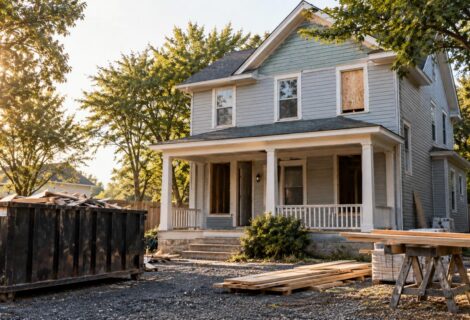
New Jersey’s real estate market rewards investors who move quickly. Distressed colonials in Essex County, mixed-use buildings in Hudson, multi-family rentals in Camden , opportunities turn over fast, and conventional bank timelines rarely match the pace. Hard money lenders fill that gap, but the best lenders in the state are not indiscriminate capital dispensers. They underwrite every deal before they quote terms, and borrowers who walk in underprepared waste days , sometimes weeks , circling back with missing information while a better-prepared competitor closes the deal.
This guide walks through exactly what a lender like AMZA Capital reviews before issuing terms on a New Jersey hard money loan. Treat it as a pre-flight checklist. If you can answer every question below before you pick up the phone or submit a form, you will compress the quote process significantly and project the credibility that experienced lenders respond to.
Why New Jersey Deals Require Careful Underwriting
New Jersey is a judicial foreclosure state with some of the longest timelines in the country if a loan goes sideways. That fact sits in the back of every lender’s mind during underwriting. Lenders compensate by scrutinizing exit plans and collateral values more carefully than they might in non-judicial states. It is not a reason to avoid the market , New Jersey’s density, transit access, and supply constraints continue to generate strong investor returns , but it is a reason to understand why your lender needs more than a handshake and a purchase contract.
According to NAR research, inventory pressures in the Northeast have kept median prices elevated relative to national averages for several years running. That compression makes accurate ARV support non-negotiable: lenders cannot rely on rising-tide appreciation to paper over weak collateral assumptions.
The Property Address And Purchase Price

Every conversation starts with a specific address. General descriptions , “a three-family in Passaic” or “a fixer in Burlington County” , do not allow a lender to pull comparable sales, review flood zone designations, check municipal tax records, or assess neighborhood trajectory. The moment you have a property under contract or in serious negotiation, write down the full street address and bring it to every lender conversation.
Pair the address with your contracted purchase price and a brief explanation of how you arrived there. Was it listed on the MLS and you came in under asking? Was it a direct-to-seller deal at a discount to market? Lenders want to understand the relationship between what you are paying and what the asset is actually worth in its current condition. A purchase price significantly above assessed value is not automatically a problem, but it requires context. A purchase price significantly below comparable sales is a positive signal , it creates equity from the moment of closing.
After-Repair Value And How You Support It
ARV is the single most important number in a fix-and-flip or bridge loan scenario. It is the ceiling against which your loan amount is measured, and it drives every leverage calculation the lender runs. Saying “I think it’ll be worth around $475,000 after work” is not underwriting , it is a guess. Lenders need to see the logic.
Bring a set of comparable closed sales from the past six to twelve months within a reasonable radius. In dense northern New Jersey markets, that radius may be half a mile. In more rural southern counties, you may need to go wider, but then you must explain why those comps are appropriate. Identify properties of similar size, condition, age, and configuration. If your subject has a finished basement or an extra bedroom that the comps lack, call it out and show how you adjusted.
If you have an independent appraisal or a broker price opinion, bring it. If not, a well-organized comparable grid with MLS data and a clear narrative goes a long way toward demonstrating that your ARV is defensible, not aspirational.
The Rehab Scope And Budget

Lenders who finance renovation projects need to understand what the renovation entails. A cosmetic refresh , paint, flooring, fixtures , carries different risk than a gut renovation involving structural work, new HVAC, or a roof replacement. The more invasive the scope, the more a lender wants to see evidence that you have priced it accurately.
Prepare a line-item budget, not a single aggregate number. Break it down by trade: demo, framing, electrical, plumbing, HVAC, roofing, windows, flooring, kitchen, bathrooms, exterior, landscaping, permits, contingency. A contingency line of ten to fifteen percent is standard and actually reassures experienced lenders , it signals that you understand construction projects almost never run exactly to plan.
If you are using a licensed general contractor, have their information ready and ideally a signed contract or detailed proposal. If you are self-managing subs, be prepared to explain your construction management experience and how you are controlling costs. Lenders are not trying to micromanage your renovation; they are trying to assess whether the budget is realistic and whether you have the experience to execute it.
Your FICO Context And Credit Narrative
Hard money lenders are asset-based lenders, which means the property’s collateral value carries more weight than your personal credit history compared to a conventional mortgage. That said, credit is not irrelevant. Most lenders establish a minimum threshold, and scores in the mid-600s or above generally keep a file moving forward. More importantly, lenders want to understand the story behind any significant derogatory marks.
A foreclosure from 2012 that you can explain clearly is very different from a pattern of recent missed payments across multiple accounts. If your credit file has complexity, get ahead of it. Write a brief narrative that explains what happened and what has changed. Borrowers who acknowledge past credit events and contextualize them are easier to work with than borrowers who seem surprised by their own file.
Liquidity And Reserves
Lenders assess whether you have the financial resources to close the deal, carry the loan through the renovation period, and absorb surprises without defaulting. That means they will want visibility into your liquid assets , cash in bank accounts, investment accounts, or other readily accessible sources.
The specific reserve requirement varies by deal structure and lender, but as a general rule, you should be able to demonstrate that you can cover your down payment, closing costs, and several months of carrying costs before rehab proceeds begin flowing. Borrowers who are stretched to the last dollar at closing are higher-risk borrowers, regardless of how good the deal looks on paper.
Bank statements going back two to three months are the standard documentation. If your liquidity comes from a business account or a partnership, be ready to explain the sourcing.
Rental Income And Lease Documentation For Income-Producing Properties
If the property already has tenants, or if your exit strategy involves holding the asset as a rental, lenders will want to see rent rolls, existing leases, and a clear picture of current and projected income. This information feeds into DSCR calculations for any loan that transitions from bridge to longer-term hold financing.
Understanding DSCR is particularly important for investors who plan to refinance into a rental loan after renovation. AMZA Capital’s guide on DSCR loans and what real estate investors should prepare covers this in detail and is worth reading before you structure a deal that depends on a rental refi as the exit.
Your Exit Plan
Exit strategy is not a formality , it is underwriting. Lenders need to believe that you have a credible, specific plan to repay the loan within the term. There are three common exits for New Jersey hard money deals: sell the property after renovation, refinance into a long-term rental loan, or pay off with proceeds from another asset. Each requires different documentation.
For a sale exit, show comparables that support your projected sales price and demonstrate that the market for that price point in that area is active. Stale inventory and long days-on-market statistics in your target price bracket are red flags that a competent lender will identify. For a refinance exit, understand the DSCR qualification standards of conventional or portfolio lenders you intend to approach, and verify that your projected rental income and loan balance will clear their thresholds. For a payoff from another source, document where those funds are coming from and on what timeline.
Loan Purpose And Deal Structure
Be direct about what you need the loan to accomplish. Are you financing the purchase only, or do you need the lender to cover a portion of construction costs as well? Is this a refinance of a property you already own? Are there multiple parcels or a complex title situation? Lenders structure differently depending on loan purpose, and clarity here prevents scope creep that slows the process.
AMZA Capital (CA DFPI 60DBO 86104, NMLS 2262631) works with real estate investors across New Jersey on fix-and-flip loans, bridge financing, and related transaction structures. Reaching out with a complete file , address, purchase price, ARV support, rehab budget, credit context, liquidity documentation, exit plan, and loan purpose , positions your deal for a faster and more accurate response. You can explore financing options and submit your scenario at AMZA Capital’s website when you are ready to move.
Related Guides
More guides from AMZA Capital:
- Bridge Loans in New Jersey
- Hard Money Loan Rates
- Hard Money Loan Documents
- 100 Percent Fix And Flip Financing: When Experienced Investors May Qualify
- Hard Money Loans in Georgia
- Hard Money Loans in Ohio
- All investor loan guides by state and program
START WITH AMZA CAPITAL’S FREE QUOTE PAGE.
*This article is provided for informational purposes only and does not constitute legal, financial, or investment advice. Loan availability, terms, and eligibility are subject to underwriting review and may vary based on individual circumstances, property type, and market conditions. AMZA Capital is licensed under the California Department of Financial Protection and Innovation, License No. 60DBO 86104, NMLS 2262631. Licensing does not constitute an endorsement or guarantee of loan approval. Investors should conduct their own due diligence and consult qualified professionals before making real estate or financing decisions.*